





Are you concerned about cocaine detection times? It’s a good first step to get informed. Cocaine stays in the body for different lengths of time depending on several factors, including the type of drug test used. These detection timelines vary based on frequency of use, metabolism, and other factors. According to the Ohio Department of Health, unintentional overdose deaths involving cocaine increased by 7% in 2023. This highlights the importance of awareness, early intervention, and access to support.
Common testing methods include urine, blood, saliva, and hair, each with its detection window. Understanding how long cocaine is detected is especially important for situations like job screenings, legal matters, or making informed decisions about your health.
What is Cocaine?
Cocaine is a powerful stimulant and local anesthetic classified as a Schedule II controlled substance due to its high abuse potential. It is FDA-approved for medical use as a topical anesthetic, primarily in ear, nose, and throat (ENT) procedures. It is commonly available in a topical solution form under brand names like Goprelto and Numbrino.
How Long Does Cocaine Stay in Your Urine After Quitting?
Cocaine stays in your urine for 2 to 4 days after quitting, depending on several factors such as frequency of use, dosage, metabolism, and overall health. For occasional users, cocaine metabolites like benzoylecgonine are detectable in urine for up to 72 hours. However, in chronic or heavy users, the detection window extends up to 10–14 days. Urine testing is the most common method used for drug screening because it’s non-invasive and offers a relatively accurate detection period. While the drug itself is processed and eliminated from the bloodstream quickly, its metabolites take longer to exit the body, so they remain detectable in urine for several days after the last use.
How is Cocaine Processed in the Body to be Detected in Urine?
Cocaine is processed in the body to be detected in urine through a process of rapid metabolism and elimination. Once consumed, cocaine enters the bloodstream and is quickly broken down by enzymes in the liver and blood into primary metabolites, mainly benzoylecgonine and ecgonine methyl ester. These metabolites are water-soluble, allowing the kidneys to filter them and excrete them through urine. Benzoylecgonine, in particular, is the key marker targeted in urine drug tests.
What Tests are Done to Detect Cocaine in the Body in Ohio?
The tests done to detect cocaine in the body in Ohio are urine, blood, saliva, and hair tests, with urine testing being the most commonly used method due to its accuracy and convenience.
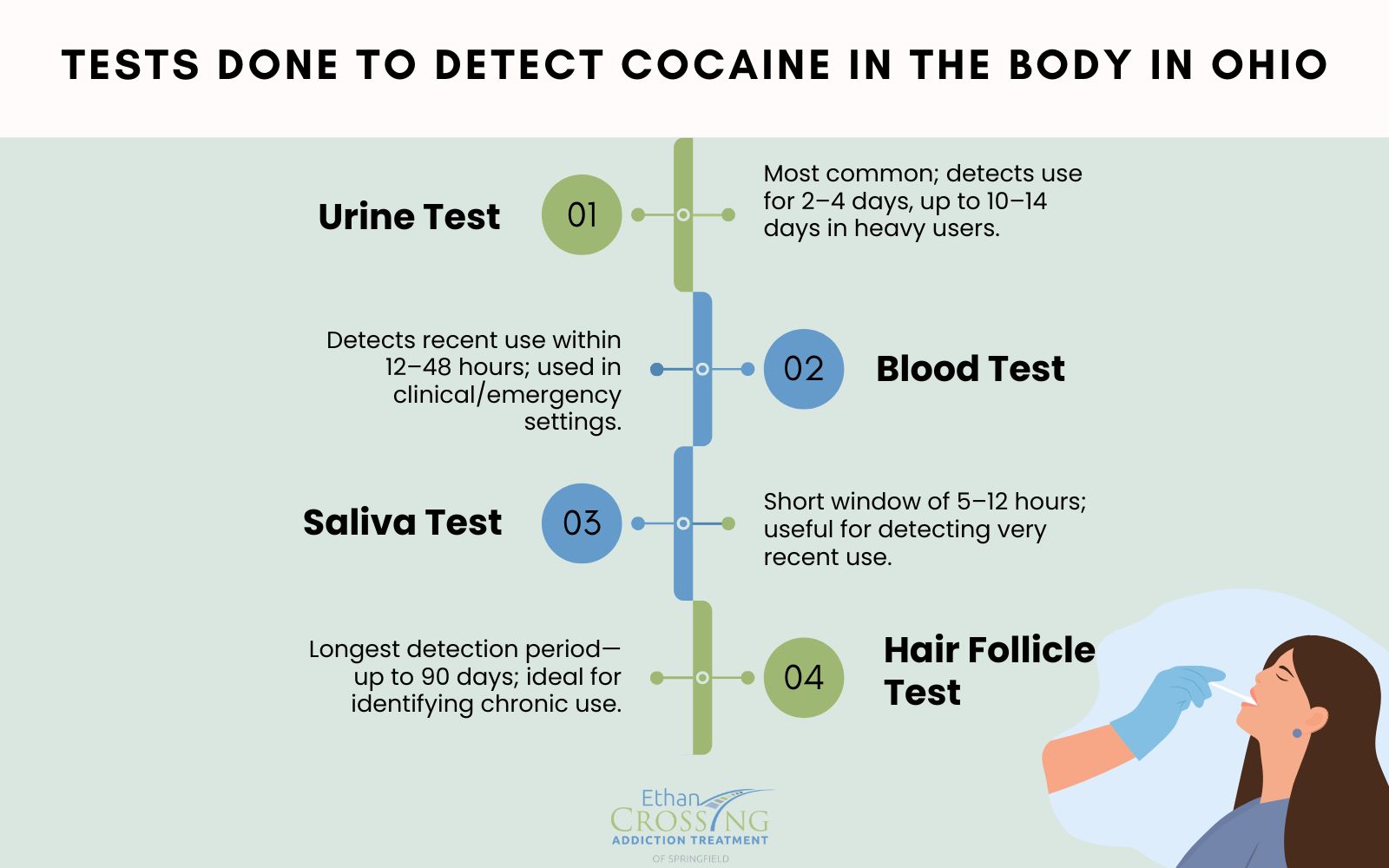 Below is a breakdown of each test method and how it works:
- Urine Test: Urine tests are the most commonly used method for detecting cocaine use. They detect cocaine metabolites, such as benzoylecgonine, for up to 2–4 days after use. In cases of heavy or chronic use, detection extends up to 10–14 days.
- Blood Test: Blood tests detect cocaine for a shorter period, usually up to 12–48 hours after use. This method is used in emergency or clinical settings due to its shorter detection window.
- Saliva Test: Saliva tests detect cocaine use within 5 to 12 hours after consumption. The detection window varies based on the amount used and individual factors.
- Hair Follicle Test: Hair follicle tests offer the longest detection window, capable of identifying cocaine use for up to 90 days after the last use. This method is particularly useful for detecting long-term or chronic use.
What are the Factors That Influence Cocaine Detection Time in Urine?
The factors that influence cocaine detection time in Urine are frequency of use, dosage, metabolism, body composition, hydration levels, and overall health. These factors determine how quickly the body breaks down and eliminates cocaine and its metabolites. As a result, detection times vary significantly from person to person, even with the same testing method.
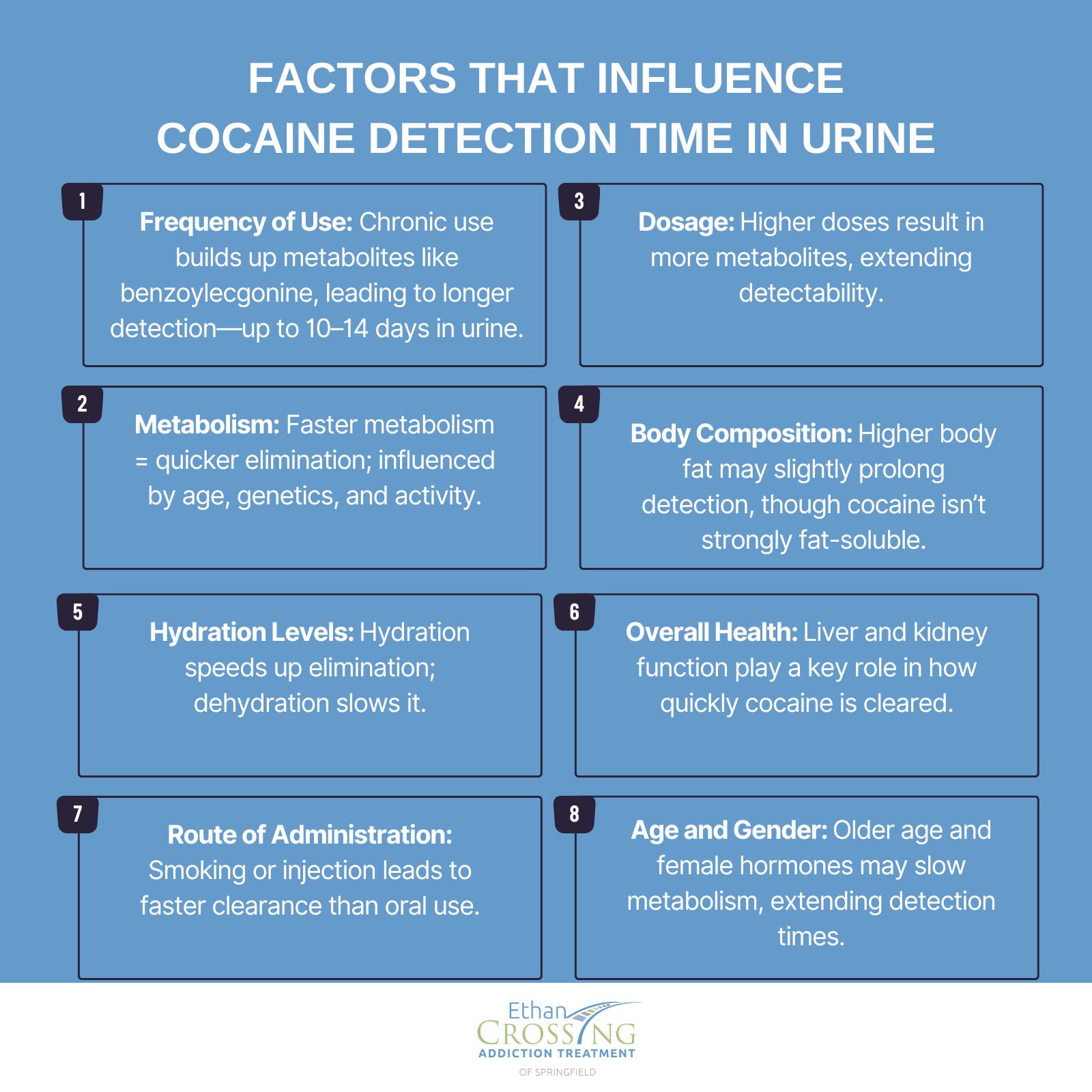
Here’s a brief breakdown of key factors:
- Frequency of Use: Frequent or chronic cocaine use leads to the accumulation of metabolites like benzoylecgonine in the body, which prolongs the detection window, particularly in urine and hair tests, as found by a study, “Effect of Repeated Cocaine Administration on Detection Times in Oral Fluid and Urine,” published in the Journal of Analytical Toxicology. Occasional users usually clear the drug within a few days, while regular users test positive for up to 10–14 days.
- Dosage: Larger doses take longer to metabolize and excrete, extending detection times. High doses also increase the concentration of metabolites, making them detectable for a longer period.
- Metabolism: People with faster metabolisms tend to eliminate cocaine more quickly. Metabolic rate is influenced by age, genetics, physical activity, and thyroid function.
- Body Composition: Although cocaine isn’t stored extensively in fat, people with higher body fat percentages experience slightly longer detection times, especially for low water-soluble compounds.
- Hydration Levels: Well-hydrated individuals flush out cocaine metabolites faster through urine. Dehydration slows renal excretion, prolonging detection windows.
- Overall Health: Liver and kidney health are critical since these organs metabolize and filter out cocaine. Impaired function leads to slower processing and longer detection.
- Route of Administration: Cocaine taken intravenously or smoked is absorbed more rapidly and cleared more quickly compared to oral ingestion, which extends detection time slightly due to slower absorption.
- Age and Gender: Older adults metabolize substances more slowly, extending detection. Hormonal differences in women also affect how drugs are processed.
Each of these factors works in combination, meaning no two individuals have the same cocaine detection timeline, even if they used the same amount.
What is the Half-Life of Cocaine?
The half-life of a drug refers to the amount of time it takes for half of the substance to be eliminated from the bloodstream. In the case of cocaine, its average half-life is relatively short, about 1 hour. This means that within one hour, the concentration of cocaine in the blood is reduced by half. However, the metabolites of cocaine, particularly benzoylecgonine, have a longer half-life of around 6 to 12 hours, which is why they remain detectable in the body for much longer. This short half-life makes cocaine itself difficult to detect in tests like blood or saliva beyond 12 to 48 hours after use, especially in light or one-time users. On the other hand, urine and hair tests, which target the longer-lasting metabolites, offer a more reliable detection method.
Are There Withdrawal Symptoms With Cocaine?
Yes, there are withdrawal symptoms with cocaine, particularly in individuals who have used it regularly or in large amounts. The withdrawal process begins within the first 24 to 72 hours after the last use. During this time, individuals experience intense cravings, fatigue, depression, irritability, and increased appetite. Over the next one to two weeks, symptoms include anxiety, mood swings, sleep disturbances, and slowed thinking. In some cases, psychological effects like cravings and difficulty experiencing pleasure (anhedonia) persist for several weeks or even months, especially in long-term users. Unlike some substances, cocaine withdrawal is not usually physically dangerous, but the emotional and mental challenges are significant and require support or treatment.
How to Get Treatment for Cocaine in Ohio?
To get treatment for cocaine addiction in Ohio, you must start by exploring a range of professional resources designed to support recovery. Treatment options vary from medically supervised detox programs to outpatient counseling, inpatient rehab, and long-term aftercare services, each tailored to individual needs.
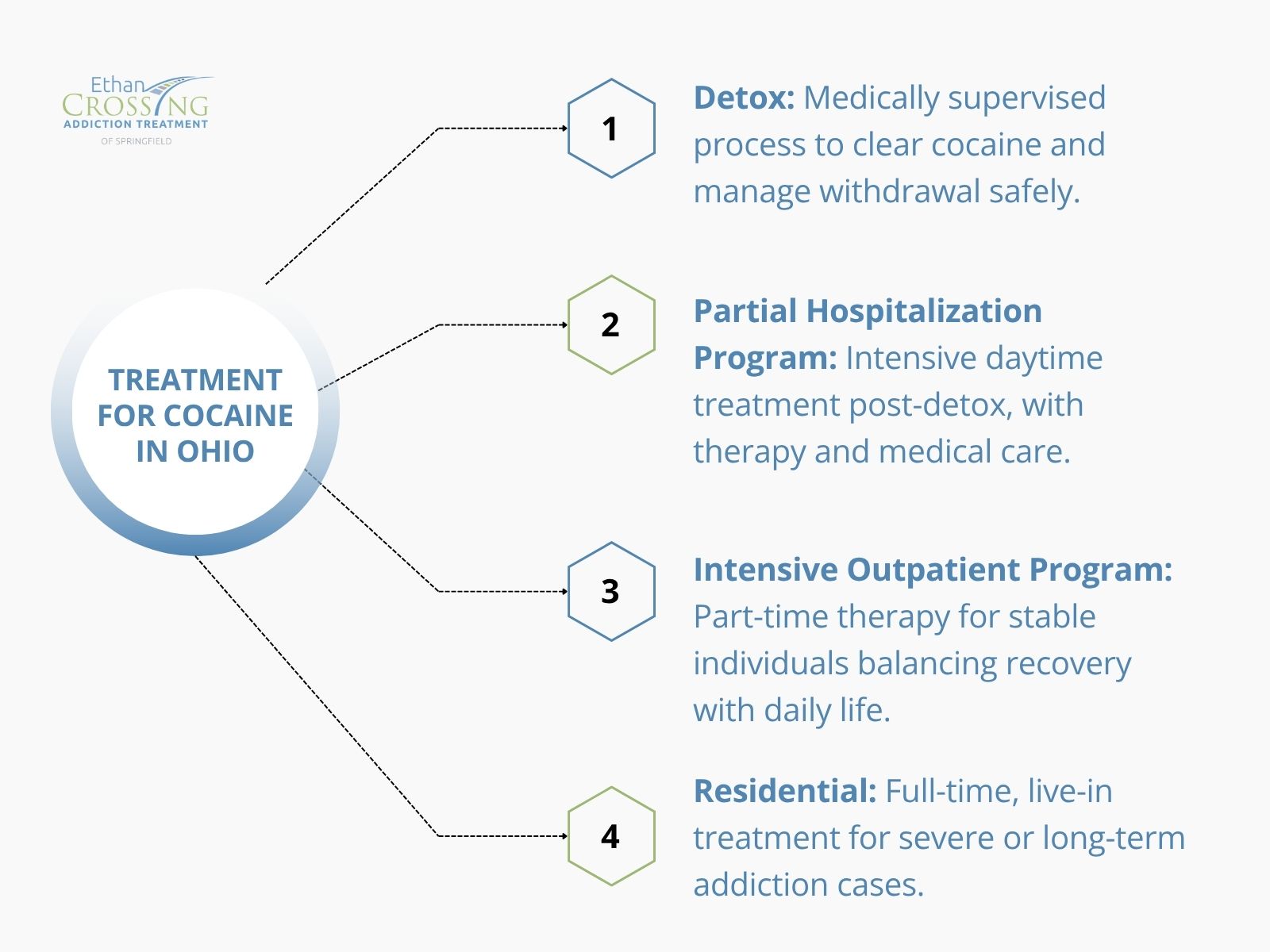
Here are the treatment options in Ohio:
- Detox: Detox is the initial phase of treatment where the body clears itself of cocaine under medical supervision. Medical detox helps manage withdrawal symptoms safely and prepares individuals for ongoing care.
- Partial Hospitalization Program (PHP): PHP provides intensive therapy and medical monitoring during the day while allowing patients to return home or to sober living in the evenings. Partial hospitalization programs are effective for individuals who have completed detox and need structured therapy during the day, especially for addressing the psychological effects of cocaine withdrawal.
- Intensive Outpatient Program (IOP): IOP offers flexible, part-time treatment involving group and individual therapy several times a week, ideal for those with a stable living environment. Suitable for those with mild to moderate addiction or as a step-down from inpatient care. It helps maintain recovery with flexibility for work or family life. Ethan Crossing is known for offering some of the best IOP services in town, providing structured support with the flexibility clients need.
- Residential Treatment: Residential programs offer 24/7 care in a structured, live-in setting, with daily therapy, peer support, and relapse prevention education. Residential treatment programs are Ideal for individuals with long-term or severe cocaine addiction, offering intensive, round-the-clock support to build coping skills and prevent relapse.
Does Cocaine Show Up on a Urine Test?
Yes, cocaine does show up on a urine test. Urine tests are the most common method for detecting cocaine use, as they identify the presence of benzoylecgonine, a primary metabolite of cocaine. This substance remains detectable in urine for 2 to 4 days after use. However, in cases of heavy or frequent use, detection windows extend up to 10–14 days. The accuracy and ease of urine testing make it a standard choice for employment screenings, legal cases, and clinical assessments.
How Long Does Cocaine Stay in Urine Compared to Heroin?
Cocaine stays in the urine for a shorter duration compared to heroin. Cocaine is detected in urine for 2 to 4 days, but in cases of heavy or chronic use, this window extends up to 10–14 days. Heroin, on the other hand, is usually detectable for 1 to 3 days, but its primary metabolite, morphine, remains in the system for up to 7 days, depending on usage patterns and individual factors. Overall, both drugs have relatively short detection windows, but heroin’s metabolites linger slightly longer in certain cases.
Can Cocaine be detected after a week In Urine?
Yes, cocaine can be detected in urine after a week in some cases. Factors like metabolism, dosage, hydration, and overall health influence how long cocaine and its primary metabolite, benzoylecgonine, stay in the body. As a result, urine tests detect cocaine use even a week after the last dose, especially in frequent users.
How is Cocaine Eliminated from the Body In Urine?
Cocaine is eliminated from the body in urine through a process of metabolism and excretion. After use, the liver breaks down cocaine into primary metabolites such as benzoylecgonine and ecgonine methyl ester, which are then filtered out by the kidneys. Factors like dosage, metabolism, and overall health affect how quickly this process occurs.
Is Cocaine Addictive?
Yes, Cocaine is highly addictive. It is a powerful stimulant that affects the brain’s reward system, leading to intense cravings and compulsive use. Repeated use quickly leads to physical and psychological dependence, making it difficult to stop without professional help. Its high abuse potential is why it is classified as a Schedule II controlled substance.