





Wellbutrin withdrawal is the set of symptoms that occur when a person reduces or stops taking Wellbutrin. According to Andrew A. et al., in their 2022 study titled Bupropion Toxicity and published in the National Library of Medicine, In a retrospective analysis of 30,026 adolescent overdoses, bupropion overdose was associated with increased risk of death (0.23%), seizures (27% ), and multiple major outcomes.
The symptoms of Wellbutrin withdrawal include mood swings, irritability, anxiety, headaches, and sleep disturbances. As Hays noted in his 2003 study titled Bupropion for the Treatment of Tobacco Dependence: Guidelines for Balancing Risks and Benefits, published in CNS Drugs, these symptoms often arise when the body readjusts to the lower neurotransmitter levels.
The treatment options for Wellbutrin withdrawal involve gradual tapering, behavioral therapy, and medical detox to manage symptoms effectively. According to Maneeton et al. (2011), in their study titled Bupropion for Adults with Attention-Deficit Hyperactivity Disorder, published in Psychiatry and Clinical Neurosciences, these approaches are necessary for alleviating withdrawal symptoms and ensuring a smoother transition off the medication.
The risks of Wellbutrin withdrawal include the potential relapse of depressive symptoms, severe mood changes, and heightened anxiety. Andrew A. et al., in their 2022 study titled Bupropion Toxicity and published in the National Library of Medicine, overall, the risk of death from bupropion toxicity is relatively low, with eight reported deaths from US poison center data in 2020 despite almost 17,000 reported cases.
What Is Wellbutrin?
Wellbutrin, also known by its generic name bupropion, is an antidepressant primarily prescribed to treat major depressive disorder and seasonal affective disorder. It is also commonly used as a smoking cessation aid and has off-label applications for attention-deficit/hyperactivity disorder (ADHD). According to a review by Matej Mikulic titled Number of bupropion prescriptions in the U.S. 2004-2021, in 2021, over 29 million prescriptions for bupropion were issued in the United States.
Wellbutrin functions by inhibiting the reuptake of dopamine and norepinephrine, helping to improve mood and reduce withdrawal symptoms. The Federal Drug Administration has approved it to treat depression and smoke cessation. According to a study by Hays (2003), Bupropion for the Treatment of Tobacco Dependence: Guidelines for Balancing Risks and Benefits, published in CNS Drugs, Wellbutrin is FDA-approved for both depression and smoking cessation aid, affirming its role in these therapeutic areas.
What Is Wellbutrin Withdrawal?
Wellbutrin withdrawal is the array of physical and psychological symptoms that arise when someone stops or reduces their intake of Wellbutrin, particularly after prolonged use, leading to physical dependence.

Withdrawal occurs in various scenarios, such as missing doses, abruptly discontinuing (known as “quitting cold turkey”), or switching to a different antidepressant. Like other antidepressants, Wellbutrin affects neurotransmitters—dopamine, serotonin, and noradrenaline—creating changes in mood and cognition when levels fluctuate.
As noted by Richmond and Zwar, 2003, in a study titled Review of Bupropion for Smoking Cessation, published in Drug and Alcohol Review, Wellbutrin discontinuation impacts similar neurotransmitter pathways as SSRIs, which are commonly associated with antidepressant discontinuation syndrome.
This syndrome, often tied to serotonin-modulating drugs, underscores how even non-SSRI antidepressants like Wellbutrin produce notable withdrawal symptoms due to their significant influence on neurotransmitter dynamics.
What Are The Symptoms Of Wellbutrin Withdrawal?
The symptoms of Wellbutrin withdrawal include insomnia, digestive problems, nausea, and brain zaps. These effects result from the body adjusting to the reduced presence of Wellbutrin, which affects dopamine and noradrenaline pathways.

Most individuals do not experience severe withdrawal symptoms because Wellbutrin generally has a lower risk of dependence than other antidepressants like SSRIs. As stated by Maneeton et al., 2011, in a study titled Bupropion for Adults with Attention-Deficit Hyperactivity Disorder, published in Psychiatry and Clinical Neurosciences, Wellbutrin’s influence on neurotransmitters leads to milder withdrawal for most users.
The most common symptoms of Wellbutrin withdrawal are:
- Anxiety: When Wellbutrin use is reduced, dopamine and noradrenaline levels drop, often increasing anxiety. This is typically mild to moderate in intensity, depending on the individual.
- Depression: Wellbutrin withdrawal triggers a recurrence of depressive symptoms, especially in those with a history of mood disorders, due to lowered dopamine. The intensity ranges from mild to severe.
- Irritability: A sudden decrease in dopamine makes individuals more prone to irritability. This symptom is usually mild but becomes more intense in certain cases.
- Mood Swings: Wellbutrin affects mood regulation by influencing neurotransmitters. Upon withdrawal, mood swings occur as the body readjusts, typically with mild to moderate intensity.
- Sweating: Neurotransmitter imbalances during withdrawal lead to excessive sweating, which is generally mild but sometimes uncomfortable.
- Insomnia: The withdrawal process disrupts sleep by altering dopamine levels, leading to insomnia that varies from mild difficulty falling asleep to severe, prolonged wakefulness.
- Digestive Problems: Withdrawal causes gastrointestinal symptoms such as constipation or diarrhea, resulting from the rebalancing of neurotransmitters affecting digestion. These symptoms are generally mild.
- Nausea: Reduced dopamine levels during withdrawal often lead to nausea, typically mild to moderate in intensity.
- Brain Zaps: These sensations, described as electric shocks, result from neurotransmitter instability, especially with dopamine and noradrenaline changes. Brain zaps are generally mild but can be startling for some individuals.
These symptoms are caused by the body’s attempt to restore balance to neurotransmitter levels impacted by Wellbutrin, specifically dopamine, serotonin, and noradrenaline, affecting both physical and emotional states.
What Is The Wellbutrin Withdrawal Timeline?
The timeline of Wellbutrin withdrawal varies and is influenced by factors like dosage, duration of use, and individual metabolism. Wellbutrin has a half-life of approximately 21 hours, meaning it takes nearly a day for the body to eliminate half of the drug.
Withdrawal symptoms begin within 1-2 days of stopping Wellbutrin and last from a few days up to several weeks, depending on the factors mentioned. The drug remains detectable in the body for up to 4-5 days post-use.
Those who have been on higher doses or used Wellbutrin for an extended period are likely to experience a more prolonged and intense withdrawal period. According to a study by Maneeton et al., 2011, titled Bupropion for Adults with Attention-Deficit Hyperactivity Disorder, published in Psychiatry and Clinical Neurosciences, the severity of symptoms is closely linked to the level of physical dependence developed during treatment.
What Are The Treatments For Wellbutrin Withdrawal?
The common treatments for Wellbutrin withdrawal are medical detox, tapering, and behavioral therapies. Medical detox provides supervised care to manage symptoms while tapering gradually reduces the dose to minimize withdrawal effects.
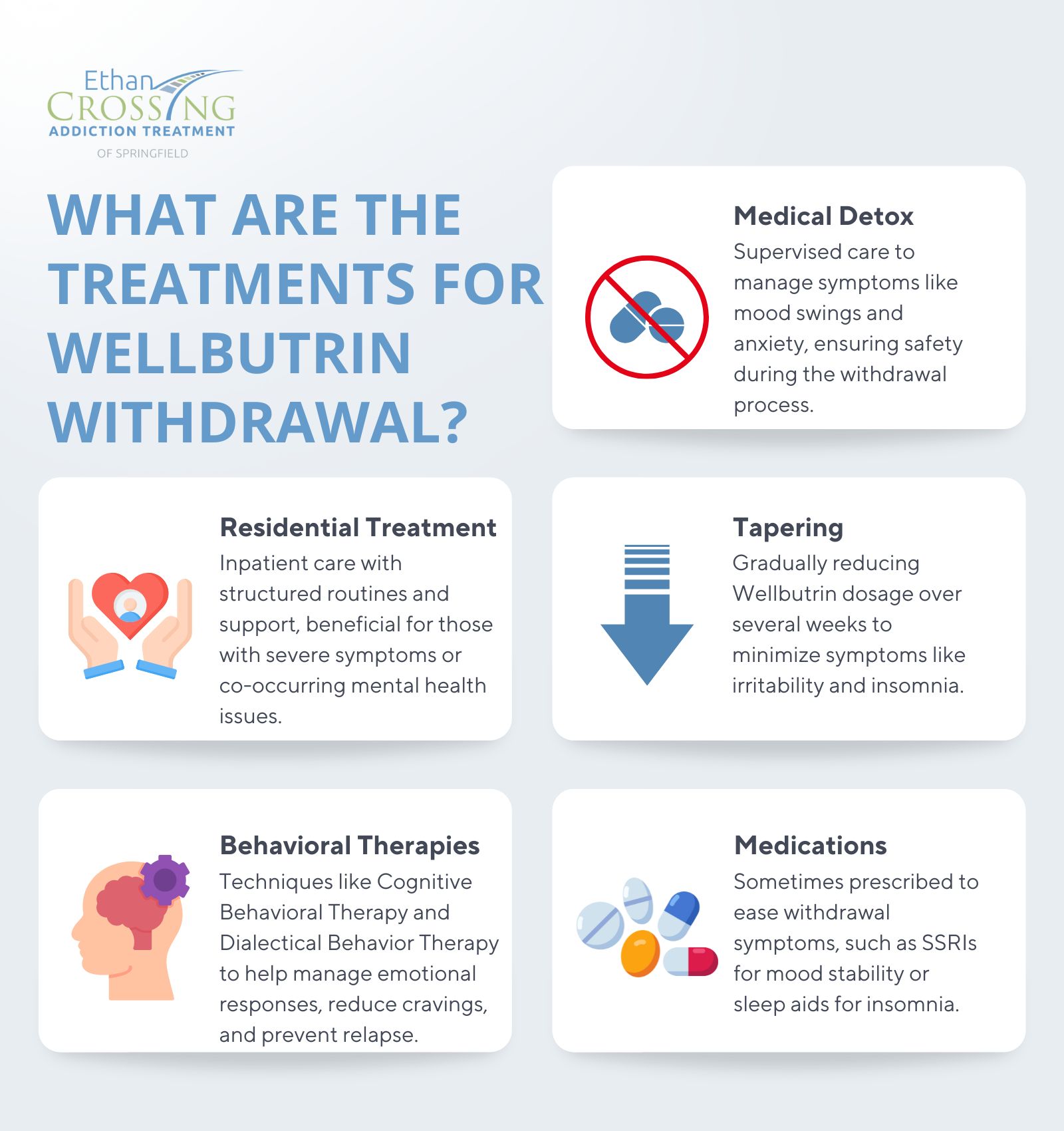
Behavioral therapies, such as counseling, offer support to address underlying emotional challenges associated with discontinuation. A study by Richmond and Zwar, 2003, titled Review of Bupropion for Smoking Cessation, published in the Drug and Alcohol Review, emphasizes the effectiveness of a structured tapering schedule alongside therapeutic support to ease withdrawal.
Medical Detox
Medical detox provides a controlled and supervised environment where individuals undergoing Wellbutrin withdrawal receive 24/7 care to manage physical and psychological symptoms. This includes medical monitoring, supportive therapies, and sometimes medications to stabilize withdrawal symptoms such as severe anxiety or mood swings.
For Wellbutrin users, medical detox ensures safety during the acute withdrawal phase, reducing the risk of complications and providing immediate medical support for severe or unexpected symptoms, making the withdrawal process more manageable and less distressing.
Tapering
Tapering involves gradually reducing the dosage of Wellbutrin over a while. This method allows the body to adjust to lower levels of the drug, which minimizes withdrawal symptoms like irritability, insomnia, and mood swings.
A tapering schedule designed by a healthcare provider typically considers the duration of use and dosage level, helping to ease withdrawal symptoms incrementally. This approach is especially helpful in preventing the sudden shock to the system that comes from abrupt cessation, resulting in a gentler, more controlled withdrawal experience.
Residential Treatment
Residential treatment is a comprehensive, inpatient program where individuals reside in a facility to receive constant care and support for Wellbutrin withdrawal. It includes medical supervision, behavioral therapies, and structured daily routines that aid in recovery.
Residential treatment helps individuals through the entirety of the withdrawal process in a safe, stable environment, away from stressors or triggers that could prompt relapse. It is valuable for those with a history of severe withdrawal symptoms, co-occurring mental health issues, or substance dependencies.
Behavioral Therapies
Behavioral therapies, such as cognitive-behavioral therapy (CBT) and dialectical behavior therapy (DBT), focus on the psychological aspects of withdrawal by addressing emotional responses, thought patterns, and behaviors.
For Wellbutrin withdrawal, these therapies help individuals develop coping mechanisms to handle cravings, manage anxiety, and reduce the risk of relapse. Behavioral therapies also aid in identifying and addressing underlying issues that have led to Wellbutrin use, supporting long-term mental health and recovery. According to a study by the Department of Psychiatry at Oxford University, over the course of 46 months, 43 percent of those who had received CBT had improved, reporting at least a 50 percent reduction in symptoms of depression, compared with 27 percent who continued with their usual care alone.
Medications
Medications used to manage Wellbutrin (bupropion) withdrawal symptoms include antidepressants, particularly selective serotonin reuptake inhibitors (SSRIs) like fluoxetine or sertraline, and benzodiazepines.
These medications help alleviate mood swings and anxiety. For instance, sleep aids or anti-anxiety medications are prescribed to help manage the discomfort of symptoms that interfere with daily life. Medications such as gabapentin are also used to address insomnia and discomfort
Medications provide relief and stability, allowing individuals to focus on the recovery process without being overwhelmed by withdrawal symptoms, thereby improving adherence to the treatment plan and reducing the likelihood of relapse.
What Are The Risks Of Wellbutrins Withdrawal?
The risks of Wellbutrin withdrawal are severe and include suicidal thoughts, self-harm behaviors, panic attacks, and extreme restlessness, all of which require careful management. Suicidal thoughts and self-harm risks are particularly concerning because Wellbutrin affects dopamine and noradrenaline levels, neurotransmitters necessary for mood stability.
When these levels drop suddenly during withdrawal, especially after high-dose or long-term use, individuals experience intense depressive symptoms, leading to feelings of hopelessness and thoughts of self-harm.
Panic attacks emerge due to heightened anxiety and fear, often characterized by rapid heart rate, shortness of breath, and overwhelming dread. This reaction is tied to neurotransmitter instability, which disrupts the body’s natural calming responses.
Severe restlessness or agitation also occurs, making it difficult for individuals to relax, focus, or sleep. This agitation stems from the abrupt changes in dopamine levels, leading to a feeling of inner turmoil and physical discomfort. According to Maneeton et al., 2011, in Bupropion for Adults with Attention-Deficit Hyperactivity Disorder, published in Psychiatry and Clinical Neurosciences, these risks are intensified in those with pre-existing mental health conditions, which exacerbate the symptoms and lead to more severe withdrawal complications.
How To Wean Off Wellbutrin?
To safely wean off Wellbutrin, doctors recommend a gradual reduction in dosage over several weeks. This involves reducing the dose by 50-100 mg every few days, allowing the body to adjust to lower levels of the medication slowly, and minimizing withdrawal symptoms.
The entire tapering process generally spans from two to six weeks, depending on the individual’s initial dosage and duration of use. According to Spiller et al., 1994, in Bupropion Overdose: A 3-Year Multi-Center Retrospective Analysis, published in The American Journal of Emergency Medicine, a gradual reduction under medical supervision is essential to ensure safety and comfort during withdrawal.
How To Cope With Wellbutrin Withdrawal?
To cope with Wellbutrin withdrawal, get exercise, eat healthy, get adequate sleep, spend time with family, and talk with a therapist. These coping strategies help manage symptoms and support emotional well-being.
Ways to cope with Wellbutrin withdrawal include:
- Stay Hydrated: Drinking plenty of water helps alleviate symptoms like nausea and headaches, and overall hydration supports physical health during withdrawal.
- Practice Mindfulness and Relaxation Techniques: Mindfulness practices such as meditation, yoga, or deep-breathing exercises can significantly reduce anxiety and improve mood.
- Maintain a Healthy Diet: Consuming a balanced diet rich in nutrients stabilizes mood and energy levels, supporting the body through withdrawal. Foods high in omega-3 fatty acids and whole grains are particularly beneficial.
- Establish a Support System: Reaching out to friends, family, or support groups can provide emotional support and encouragement, helping individuals feel less isolated during the withdrawal process.
- Engage in Regular Physical Activity: Exercise enhances mood by releasing endorphins and reducing stress. Activities like walking, jogging, or participating in sports can be effective in coping with withdrawal symptoms.
These strategies assist in managing withdrawal symptoms and also promote overall well-being, making the transition off Wellbutrin more manageable.
Can Wellbutrin Withdrawal Affect Pregnancy?
Yes, Wellbutrin withdrawal can affect pregnant women, leading to various symptoms such as anxiety, irritability, mood swings, and insomnia. Pregnant individuals also experience increased emotional sensitivity and depressive symptoms as their bodies adjust to hormonal changes alongside the absence of the medication.
Research by McKeigue et al., 2015, published in The British Journal of Psychiatry, highlights that pregnant women discontinuing antidepressants like bupropion face heightened emotional instability, necessitating close monitoring and support throughout the withdrawal process.
Is Wellbutrin An SSRI?
No, Wellbutrin is not classified as a selective serotonin reuptake inhibitor (SSRI). Instead, it is a norepinephrine-dopamine reuptake inhibitor (NDRI) that primarily affects the reuptake of dopamine and norepinephrine, with minimal impact on serotonin levels.
This distinction is important as it highlights the different mechanisms by which antidepressants operate. According to Kast et al., 2006, in Bupropion: Pharmacology and Therapeutic Applications, published in Expert Review of Neurotherapeutics, Wellbutrin’s unique action differentiates it from SSRIs, which focus primarily on serotonin reuptake inhibition.
Does Wellbutrin Cause Weight Loss?
Yes, Wellbutrin is associated with weight loss in some individuals. This effect is primarily due to its ability to increase metabolic rate, which leads to faster calorie burning. By enhancing dopamine and norepinephrine activity, Wellbutrin stimulates metabolic processes and suppresses appetite, making it easier for individuals to lose weight. A study by Castaldelli-Maia et al., 2015, in The Journal of Clinical Psychiatry, highlights that this weight loss effect is beneficial for those concerned about weight gain associated with other antidepressants.
Is Wellbutrin Used For Smoking Cessation?
Yes, Wellbutrin is used as a smoking cessation aid. It helps individuals quit smoking by reducing cravings and withdrawal symptoms associated with nicotine addiction. By increasing dopamine and norepinephrine levels, Wellbutrin mitigates the negative effects of nicotine withdrawal, making the quitting process more manageable. According to the Centers for Disease Control and Prevention, In 2021, an estimated 11.5% (28.3 million) of US adults currently smoked cigarettes. This prevalence shows the need for Wellbutrin for smoking cessation.