





It takes 2-3 weeks for the liver to begin repairing itself after stopping alcohol consumption, though the exact duration depends on the extent of damage.
According to the 2024-2026 Community Health Needs Assessment (CHA) for Clark County, approximately 18% of adults in the surrounding counties report binge drinking (consuming five or more drinks on one occasion for men, or four or more for women) in the past 30 days. This number is in line with or slightly above state and national averages
The signs of alcohol-related liver damage include fatigue, abdominal discomfort, jaundice, weakness, swelling, confusion, and easy bruising.
The types of liver disease caused by alcohol are fatty liver disease, alcoholic hepatitis, fibrosis, and cirrhosis, each with different levels of reversibility.
Treatment focuses on abstinence, nutritional support, medical therapy for severe cases, monitoring with tests and imaging, managing complications, and liver transplantation in end-stage disease.
Recovery timelines vary by stage, with early conditions healing quickly and advanced damage focusing on halting progression.
The liver revivifies in early stages, but scarring limits recovery. Prevention relies on avoiding alcohol, maintaining a healthy diet, and regular screening.
What Are the Signs of a Liver Affected by Alcohol?
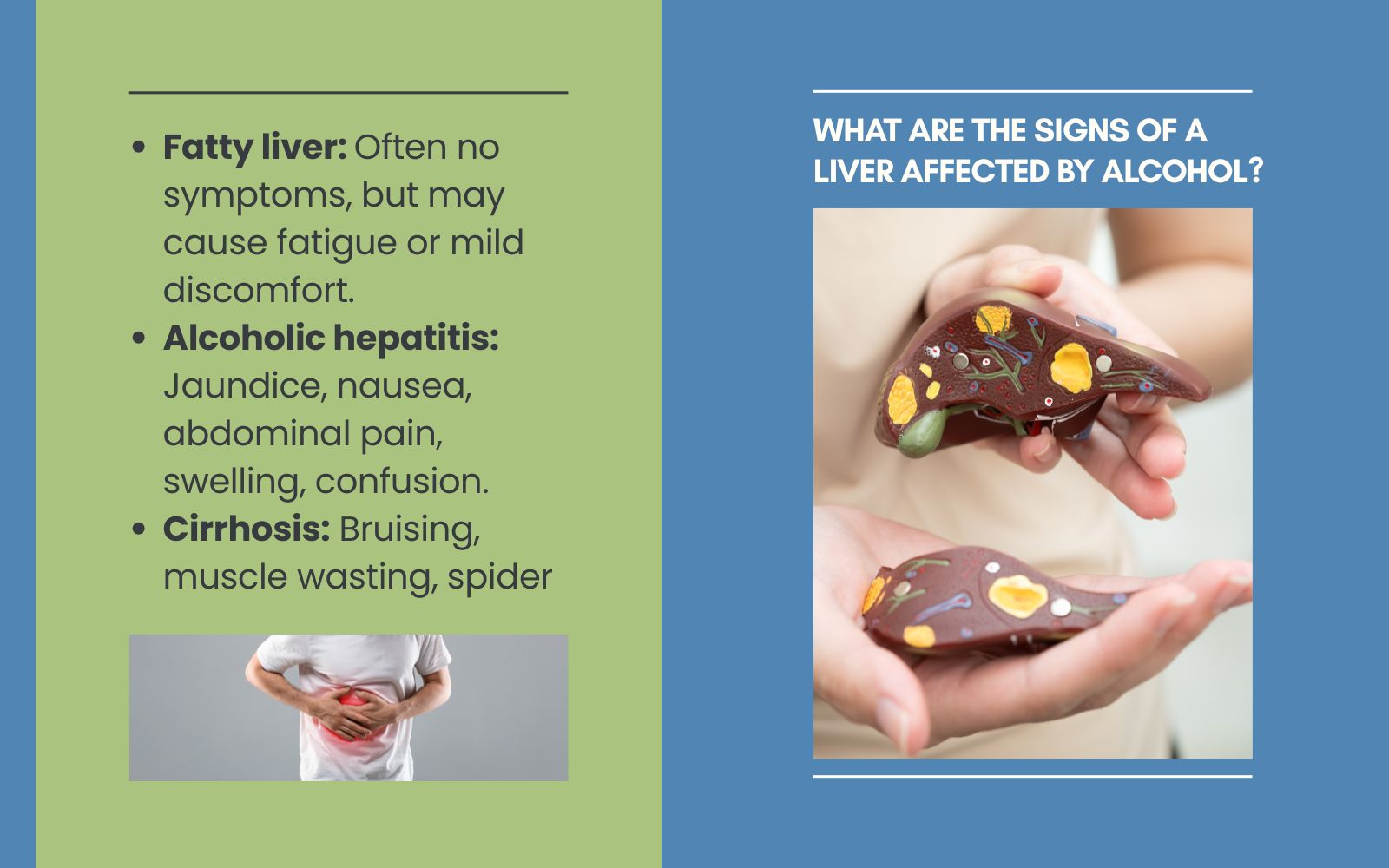
What Are the Signs of a Liver Affected by Alcohol
The signs of a liver affected by alcohol vary and are explained below:
- Fatty liver (steatosis): Tends not to have symptoms but does cause fatigue or mild discomfort in the upper-right abdomen.
- Alcoholic hepatitis: Consists of inflammation, fever, nausea, jaundice, abdominal pain, loss of appetite, weakness, swelling in the abdomen (ascites), and confusion.
- Cirrhosis: Presents with jaundice, easy bruising, muscle wasting, swelling in the legs and abdomen, encephalopathy, spider veins on the skin, and complications related to portal hypertension.
What Types of Liver Disease Are Caused by Alcohol?
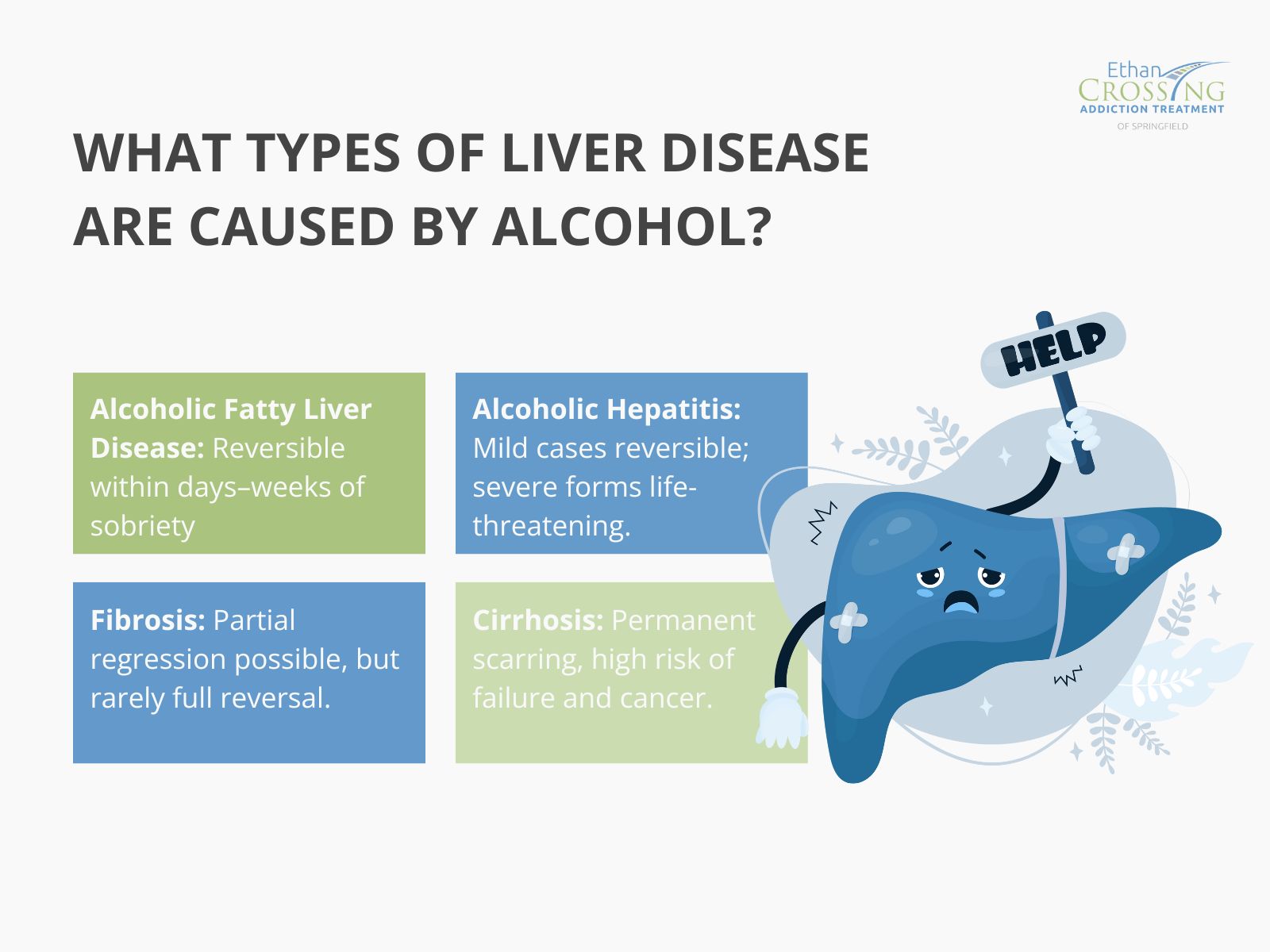
What Types of Liver Disease Are Caused by Alcohol
The types of liver disease caused by alcohol are discussed as follows:
Alcoholic Fatty Liver Disease
This earliest stage occurs when fat builds up in the liver cells after heavy drinking, sometimes within just days or weeks. It is completely reversible with total abstinence from alcohol. Over 90% of heavy drinkers develop this stage.
Alcoholic Hepatitis
Inflammation and cell death in the liver occur after prolonged or intense drinking episodes. Milder cases are reversible with sobriety, while severe alcoholic hepatitis is life-threatening and requires hospitalization.
Fibrosis
Long-term inflammation exacerbates the formation of scar tissue in the liver. While some regression is possible with extended abstinence, reversal is routinely incomplete.
Cirrhosis
This advanced scarring disrupts the liver’s architecture and function. The early stages are symptom-free, but the damage is conventionally irreversible. The condition substantially augments the risk of liver failure, portal hypertension, liver cancer, and encephalopathy.
How Is Alcohol-Related Liver Disease Treated?
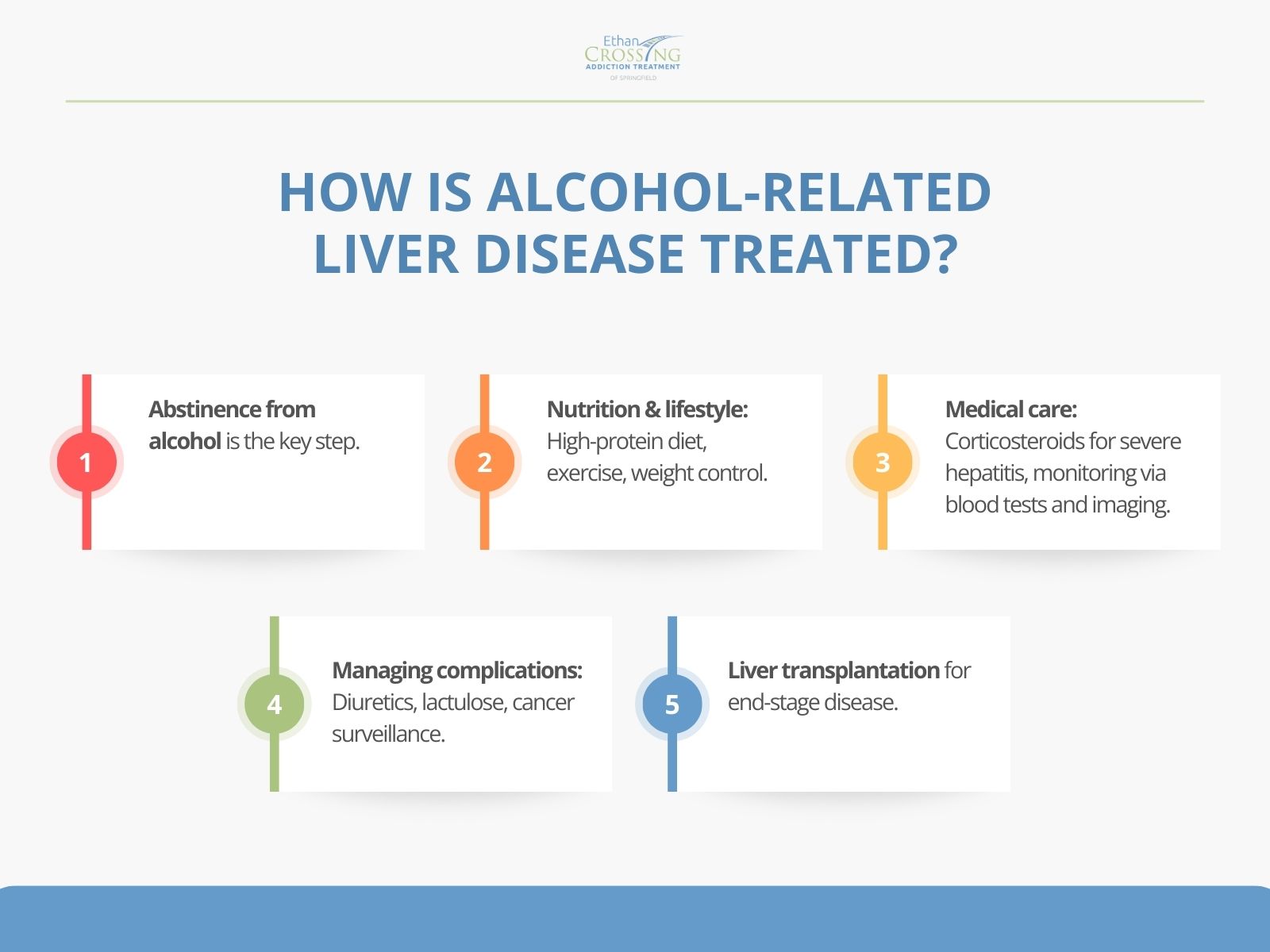 Alcohol-related liver disease is treated as indicated below:
Abstinence from Alcohol
The most important step in treatment. Even advanced fibrosis or cirrhosis is stabilized when drinking stops entirely.
Nutritional Support and Lifestyle Changes
A high-calorie, high-protein diet supports liver repair, especially in alcoholic hepatitis. Balanced nutrition, weight control, and regular exercise further aid recovery.
Medical Treatments
Severe alcoholic hepatitis is treated with corticosteroids such as prednisolone, guided by scoring tools like Maddrey’s, Lille, or MELD. Anti-fibrotic treatments remain experimental.
Monitoring and Complication Management
Ongoing evaluation incorporates blood tests (AST, ALT, GGT, bilirubin, platelet count), imaging such as ultrasound or elastography, and sometimes liver biopsy. Complications are mitigated with diuretics for ascites, lactulose for encephalopathy, and cancer surveillance for cirrhosis patients.
Liver Transplantation
Reserved for end-stage cirrhosis when there is no improvement after extended abstinence. Strict alcohol-free requirements apply before and after surgery.
What Is the Recovery Timeline for Alcohol-Induced Liver Damage?
The recovery timeline for alcohol-induced liver damage begins within days, and full recovery is seen in about two weeks of sobriety. Mild to moderate alcoholic hepatitis starts improving in 7-14 days, with full recovery taking weeks to months, depending on severity. Fibrosis regresses within weeks of stopping alcohol, but utter reversal is unlikely. Cirrhosis, once established, is permanent; the goal is to preclude worsening rather than restore lost function.
Can the Liver Regenerate Completely After Alcohol Damage?
Yes, the liver can fully regenerate after alcohol damage in early stages, such as fatty liver and mild hepatitis, but regeneration is only partial in fibrosis and minimal in cirrhosis, where scarring is permanent.
The liver has remarkable regenerative abilities, capable of replacing lost tissue and restoring function in early-stage disease. However, this regenerative capacity decreases as damage progresses. Fatty liver and mild hepatitis heal fully with abstinence, but fibrosis heals slowly and incompletely. In cirrhosis, regeneration is minimal, and scarring remains permanent.
How Can You Prevent Alcohol-Induced Liver Damage?
You can prevent alcohol-induced liver damage by limiting alcohol intake, or ideally, abstaining, which remains the most effective preventive measure. Regular health checkups with liver function tests, maintaining a healthy diet, exercising, and avoiding excessive weight gain all aid in protecting the liver. For individuals with a history of heavy drinking, early screening and intervention curbs mild conditions from progressing to irreversible stages.