





Interpersonal therapy (IPT) emphasizes the importance of interpersonal relationships and social functioning in alleviating emotional distress, particularly in addiction treatment and recovery. A meta-analysis conducted in 2013 by Pim C. et al., published in the American Journal of Psychiatry, reviewed 38 studies involving 4,356 patients and found that IPT is effective in addressing substance use disorders alongside conditions like depression and anxiety, with an overall effect size of 0.63. This indicates a moderate to large impact on reducing symptoms associated with addiction.
The key principles of IPT revolve around identifying and resolving interpersonal issues that contribute to a person’s struggles with addiction. IPT focuses on four primary problem areas: grief, role disputes, role transitions, and interpersonal deficits. The therapy works by helping individuals articulate their feelings and concerns related to these issues, providing them with tools to improve communication and build social support. Through structured sessions, therapists guide individuals in recognizing how their relationships impact their substance use and emotional health, encouraging the development of healthier coping strategies that foster more satisfying interpersonal interactions.
The main benefits of IPT for addiction treatment include its effectiveness in reducing substance use, improving emotional well-being, and enhancing interpersonal functioning. A comprehensive study published in Psychiatry Online In 2016 titled “Interpersonal Psychotherapy for Mental Health Problems” reviewed 90 studies with 11,434 participants and found that IPT effectively treats acute-phase depression and anxiety, yielding a moderate-to-large effect size of g=0.60 compared to control groups. This is particularly relevant for individuals in recovery, as addressing co-occurring mental health issues significantly reduces relapse rates.
Despite its many advantages, IPT has limitations that affect its suitability for certain individuals in addiction recovery. It is not effective for those with severe personality disorders or complex trauma histories, as the therapy’s focus on interpersonal issues does not adequately address deeper psychological challenges. Additionally, IPT requires a commitment from individuals to engage in discussions about their relationships, which is difficult for some who struggle with vulnerability or trust.
What is Interpersonal Therapy?
Interpersonal therapy (IPT) is a focused and time-limited form of psychotherapy aimed at improving interpersonal connections and social functioning, which in turn helps reduce symptoms related to addiction and co-occurring mental health issues, particularly depression and anxiety. The term “interpersonal” refers to the dynamics and interactions between individuals, emphasizing these relationships’ critical role in shaping one’s emotional well-being and recovery. Developed in the 1970s by psychiatrist Gerald Klerman and his colleagues, IPT was initially focused on treating major depression but has since been adapted for various issues, including substance use disorders.

In IPT, therapists play a pivotal role by guiding individuals through the exploration of their interpersonal relationships and the emotional challenges associated with addiction. They help individuals identify specific interpersonal issues, such as unresolved grief, role disputes, or transitions, that contribute to their substance use. Through a supportive and collaborative therapeutic relationship, therapists facilitate open communication, allowing individuals to articulate their feelings and experiences more effectively.
This process helps individuals understand how their relationships impact their emotional state and substance use. It equips them with practical skills to improve interactions and build stronger social support networks. IPT has shown effectiveness in treating individuals with substance use disorders, with studies indicating a moderate-to-large effect size of g=0.60 in reducing symptoms associated with addiction, as highlighted in a comprehensive study published in Psychiatry Online in 2016 titled “Interpersonal Psychotherapy for Mental Health Problems.” By addressing the relational aspects of addiction, IPT fosters healthier connections and supports lasting recovery.
What are The Key Principles Of Interpersonal Therapy?
The key principles of interpersonal therapy (IPT) are relevant for addiction treatment and recovery, highlighting the significant impact of interpersonal relationships on emotional well-being. IPT asserts that improving social functioning reduces symptoms associated with substance use disorders and co-occurring mental health issues like depression and anxiety. The therapy focuses on four primary areas: unresolved grief, role disputes, role transitions, and interpersonal deficits.
Addressing these interpersonal issues helps individuals understand how their relationships affect their emotional state and substance use. For example, unresolved grief leads to increased substance use, while role disputes add stress that exacerbates addiction. IPT is typically structured as a time-limited intervention lasting 12 to 16 sessions, as noted in a study published by Cleveland Clinic in 2024 titled “Interpersonal Psychotherapy (IPT).” This approach equips individuals with effective communication skills and coping strategies.
What Techniques are Used in Interpersonal Therapy?
Interpersonal therapy (IPT) techniques used in addiction treatment include exploring interpersonal challenges, processing grief, managing role disputes, and facilitating role transitions. Each approach helps individuals better understand their relationships and develop healthier ways to interact with others, which is crucial in the recovery process.
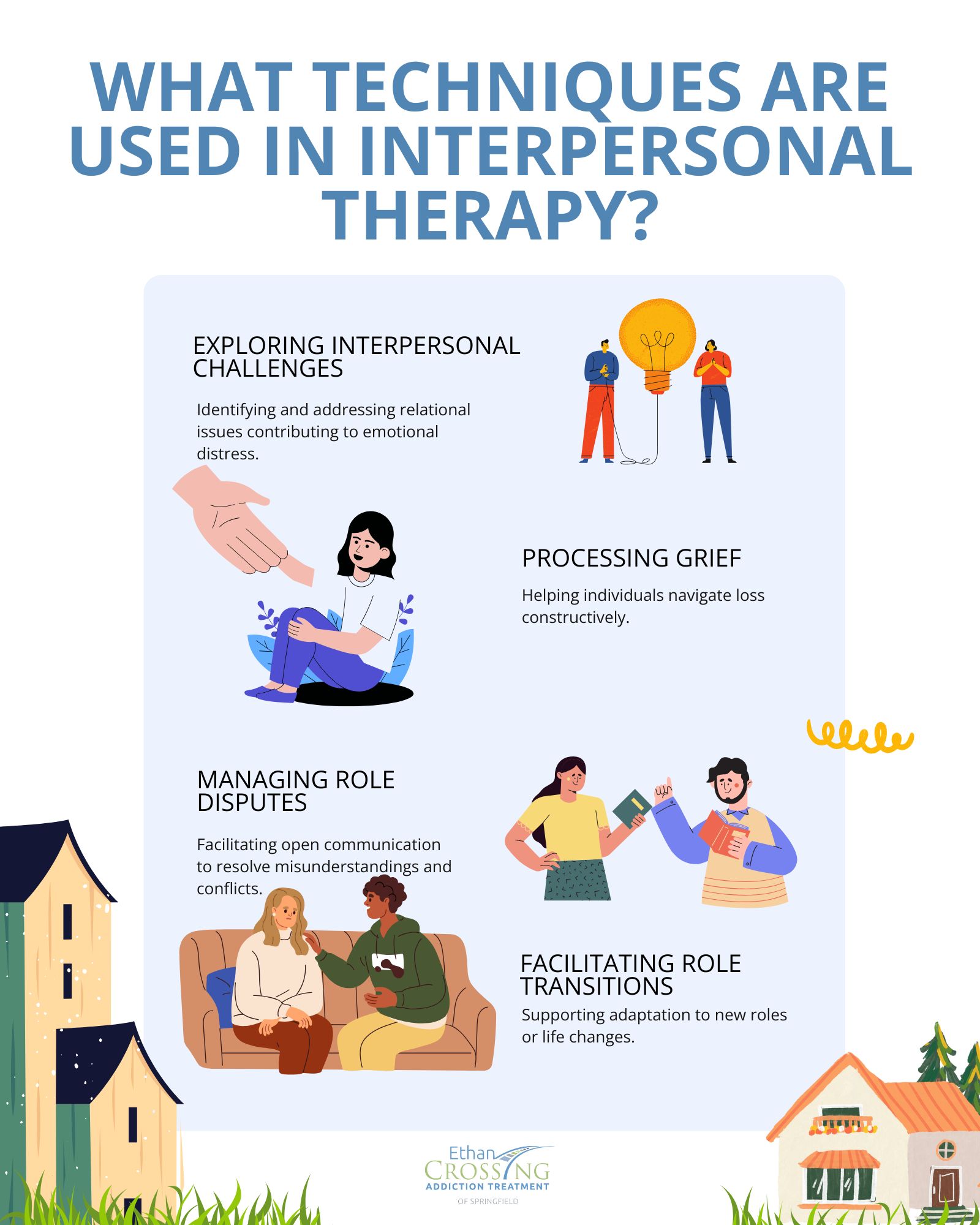
The main techniques used in interpersonal therapy include:
- Interpersonal Challenges: This technique helps individuals identify difficulties in their relationships that contribute to their substance use. By understanding how these challenges affect their emotional well-being, they foster healthier connections that support recovery.
- Grief: Therapists guide individuals in processing feelings of loss related to their addiction, such as the loss of relationships or opportunities. This support enables them to navigate their grief constructively and find healing, which is essential for maintaining sobriety.
- Role Dispute: This approach addresses conflicts in relationships that arise due to addiction. Therapists encourage individuals to explore misunderstandings and facilitate open communication, helping them reach effective resolutions that strengthen their support networks.
- Role Transition: Therapists support individuals during significant life changes, such as recovery milestones or changes in family dynamics. This support helps them adapt to new roles and build confidence, reinforcing their commitment to sobriety and healthier living.
How Does Interpersonal Therapy Work?
Interpersonal therapy (IPT) works by focusing on improving relationships and addressing specific social issues that contribute to emotional distress, which is particularly relevant in addiction treatment and recovery. The therapist provides a safe and supportive environment where individuals openly share their feelings and concerns. Together, they explore key areas such as interpersonal challenges, grief, role disputes, and role transitions.
This exploration helps individuals identify patterns in their relationships that impact their emotional state and substance use. For example, unresolved grief leads to substance use as a coping mechanism, while role disputes create additional stress that exacerbates addiction. The therapist provides guidance and feedback, encouraging individuals to express their emotions and develop effective coping strategies.
What are the stages of Interpersonal therapy?
The stages of interpersonal therapy (IPT) are divided into three main phases: the initial stage, the middle stage, and the termination stage. IPT typically consists of 12 to 16 sessions, starting with the initial stage, which includes the first 2 to 4 sessions. During this phase, the therapist establishes rapport, gathers information about the individual’s history and current interpersonal issues, and identifies specific goals for therapy, especially related to addiction recovery.
The middle stage comprises about 6 to 8 sessions, focusing on actively addressing identified interpersonal problems, such as grief, role disputes, or transitions that contribute to substance use. The therapist guides individuals in exploring these issues, developing communication skills, and implementing coping strategies essential for managing relationships and reducing the risk of relapse.
Finally, the termination stage lasts about 2 to 4 sessions, during which the therapist and individual review progress, consolidate skills learned, and discuss strategies for maintaining improvements after therapy ends. This structured approach ensures individuals receive comprehensive support throughout their therapeutic journey, helping them build a stronger foundation for long-term recovery from addiction.
What are the Benefits Of Interpersonal Therapy?
The benefits of interpersonal therapy (IPT) include the enhancement of interpersonal relationships and emotional well-being, which are necessary for maintaining sobriety and preventing relapse. This therapy also helps individuals develop practical coping strategies and increase self-awareness, ultimately fostering healthier interactions that support long-term recovery.
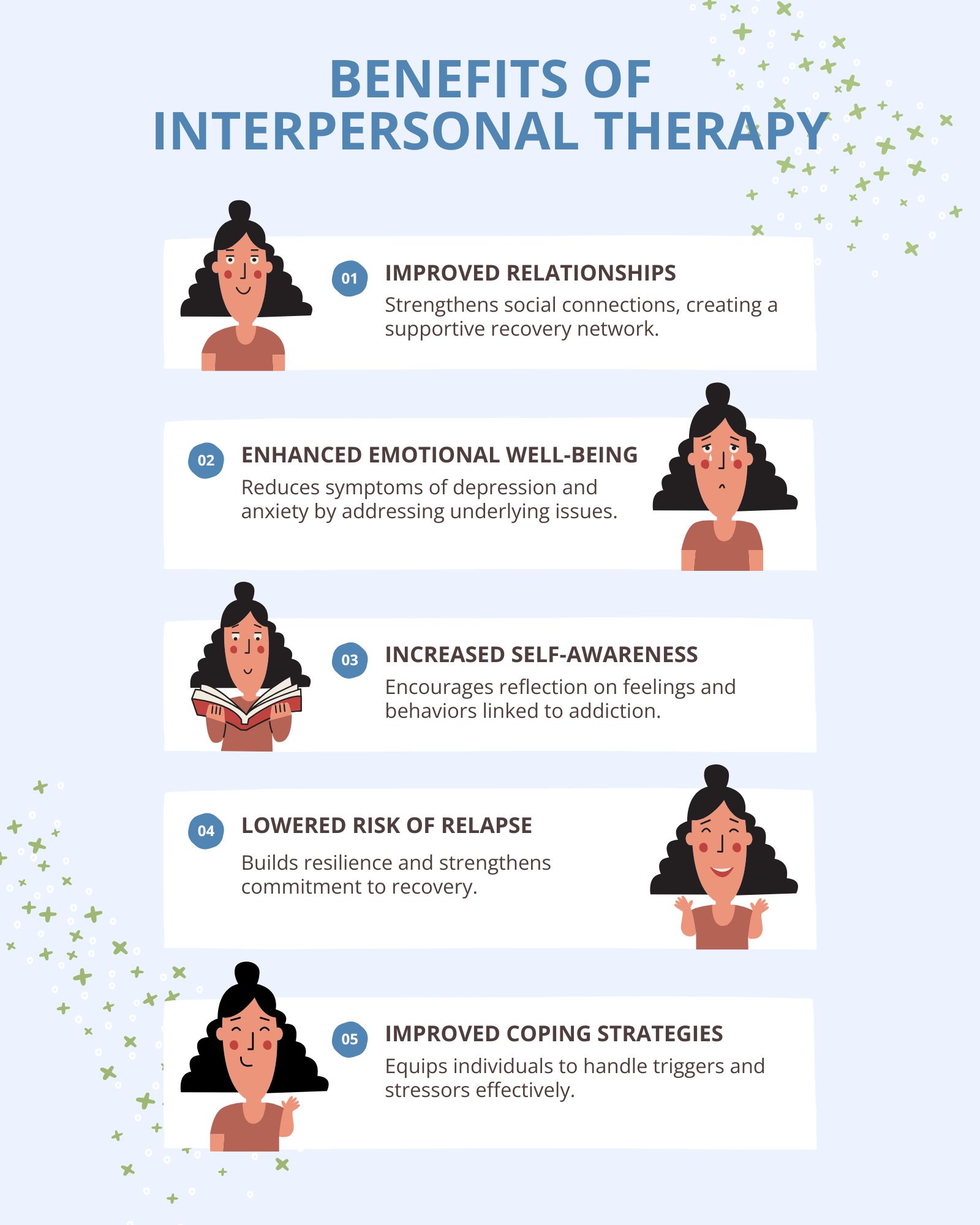
The main benefits of interpersonal therapy include:
- Improved relationships: IPT assists individuals in understanding and strengthening their relationships, creating a supportive network essential for addiction recovery. This support helps reduce feelings of isolation often experienced during recovery. In a 2022 study published by Addiction & Health Journal titled “The Effectiveness of Interpersonal Psychotherapy on Alexithymia, Emotion Regulation, and Psychological Capital of Male Substance Abusers Treated by Addiction Treatment Centers in Kerman”, participants showed significant reductions in alexithymia (F=65.14, P<0.05), meaning they became better at recognizing and expressing their emotions. Improvements in emotional regulation (F=44.72, P<0.05) helped them manage their feelings effectively, reducing conflicts in relationships.
- Enhanced emotional well-being: Tackling underlying emotional issues through IPT leads to significant reductions in symptoms of depression and anxiety. Improved emotional health is important for individuals who have used substances to cope with these feelings.
- Improved treatment outcomes: Interpersonal therapy (IPT) improves treatment outcomes for addiction patients through a focus on interpersonal relationships and emotional challenges that often contribute to substance use. A pilot study published by the Substance Abuse Journal in 2023 titled “Interpersonal Psychotherapy (IPT) for Alcohol Dependent Women with Co-occurring Major Depression” involving fourteen women with co-occurring alcohol dependence and major depression demonstrated the effectiveness of IPT. Participants attended an average of all 8 sessions, leading to significant improvements in drinking behavior and depressive symptoms, which were maintained at a 32-week follow-up.
- Increased self-awareness: IPT encourages individuals to reflect on their feelings and behaviors, leading to greater insight into how their relationships impact their substance use. This awareness motivates positive changes in behavior and decision-making.
- Lowered risk of relapse: Focusing on interpersonal dynamics helps individuals build resilience and strengthen their commitment to recovery. Improved relationships and coping skills significantly lower the risk of returning to substance use.
What Conditions Are Treated With Interpersonal Therapy?
The conditions treated with interpersonal therapy (IPT) include major depressive disorder, anxiety disorders, bipolar disorder, dysthymia, eating disorders, social anxiety disorders, borderline personality disorder (BPD), and post-traumatic stress disorder (PTSD).
Common conditions treated with interpersonal therapy include:
- Major Depressive Disorder (MDD): MDD is a mental health condition characterized by persistent sadness, loss of interest in activities, and a range of emotional and physical problems. Interpersonal therapy (IPT) helps individuals identify and address relationship issues and emotional conflicts, fostering better communication and support networks to alleviate depressive symptoms. The success rate of IPT for Major Depressive Disorder, as indicated by a significant improvement in depression symptoms, is 42% at 3 months and 61% at 12 months, according to a study by Hannu P., et al published in 2016 in BMC Psychiatry titled “Psychotherapy effectiveness for major depression: a randomized trial in a Finnish community.” This suggests that IPT is effective in reducing depressive symptoms over time, with notable improvements observed after one year.
- Bipolar Disorder: Bipolar disorder is a mood disorder marked by extreme mood swings, including episodes of mania and depression. IPT focuses on improving interpersonal functioning and relationships, helping individuals manage the social aspects of their mood changes, which reduces the frequency and severity of episodes.
- Dysthymia (Persistent Depressive Disorder): This is a chronic form of depression characterized by a low mood lasting for at least two years. IPT helps individuals explore their relationships and identify patterns that contribute to their persistent feelings of sadness, fostering healthier interactions and emotional regulation.
- Eating Disorders: Eating disorders are conditions such as anorexia nervosa, bulimia nervosa, and binge-eating disorder, characterized by unhealthy eating behaviors and body image issues. IPT addresses the interpersonal factors that contribute to disordered eating, such as family dynamics and social pressures, promoting healthier relationships with food and body image. A 2012 study published in the British Journal of Psychiatry noted that the success rates of IPT for eating disorders indicate that it is effective, with 80.0% of patients achieving remission from binge eating and 58.0% experiencing significant improvements in related psychological symptoms.
- Social Anxiety Disorders: Social Anxiety Disorders are conditions marked by intense fear or anxiety in social situations. IPT helps individuals understand the interpersonal roots of their anxiety, improve social skills, and develop strategies to cope with fear in social interactions, enhancing their confidence in relationships. Although success rates weren’t detailed, a 2014 study by John C. et. al, published in the Depression Anxiety Journal titled “Critical Review of Outcome Research on Interpersonal Psychotherapy for Anxiety Disorders” mentioned that IPT yielded positive results in open trials for SAD.
- Borderline Personality Disorder (BPD): A complex condition characterized by unstable moods, behavior, and relationships. IPT focuses on improving interpersonal relationships and emotional regulation, helping individuals navigate conflicts and build healthier connections with others. A pilot randomized study published in Frontier Psychiatry in 2020 titled “Interpersonal Psychotherapy as a Single Treatment for Borderline Personality Disorder” evaluated the efficacy of IPT adapted for BPD in 43 BPD patients, comparing it to a control group receiving a waiting list and clinical management. After 10 months, the IPT-BPD-R group showed significant improvements in general psychopathology (Clinical Global Impression Scale), social and occupational functioning (Social Occupational Functioning Assessment Scale), and BPD symptoms (Borderline Personality Disorder Severity Index), particularly in interpersonal relationships and impulsivity. Despite a 16.3% discontinuation rate due to non-adherence, results favored psychotherapy in reducing BPD symptoms.
- Post-Traumatic Stress Disorder (PTSD): A mental health condition triggered by experiencing or witnessing a traumatic event. IPT helps individuals process their trauma within the context of their relationships, promoting healing by improving communication and support from loved ones, which aids recovery.
How Does Interpersonal Therapy Help With Addiction?
IPT helps with addiction by focusing on the interpersonal relationships and social dynamics that contribute to substance and alcohol use disorders. It addresses underlying issues such as strained relationships, unresolved conflicts, and lack of social support, which exacerbate addictive behaviors. Fostering healthier communication and improving social functioning enables individuals to develop better-coping mechanisms and emotional regulation skills. Research has shown that IPT leads to significant reductions in substance use and improvements in psychological well-being; for example, a pilot study published in 2023 in the Substance Abuse Journal, titled “Interpersonal Psychotherapy (IPT) for Alcohol Dependent Women with Co-occurring Major Depression,” evaluated the effectiveness of IPT in fourteen women facing both alcohol dependence and major depression. Participants completed an average of eight sessions, resulting in significant improvements in both drinking behavior and depressive symptoms, with these gains maintained at a 32-week follow-up.
What Are The Limitations Of Interpersonal Therapy?
The limitations of interpersonal therapy (IPT) for addiction include its potential unsuitability for all individuals, as some require more intensive or structured treatment approaches, such as cognitive behavioral therapy (CBT) or motivational interviewing. IPT also necessitates a strong commitment and motivation from participants, which is challenging for those in the early stages of recovery or experiencing severe addiction-related issues.

Also, IPT focuses primarily on interpersonal relationships, which do not address the full spectrum of addiction-related factors, such as trauma or co-occurring mental health disorders. Furthermore, the effectiveness of IPT is influenced by the therapist’s experience and skill in navigating complex interpersonal dynamics, making the quality of therapy variable. Finally, as a time-limited intervention, IPT does not provide the ongoing support some individuals need during the long-term recovery process.
How effective is Interpersonal therapy?
Interpersonal therapy (IPT)is very effective in treating a range of mental health conditions, particularly mood disorders such as depression and anxiety. It focuses on improving interpersonal relationships and social functioning, which are often key factors in emotional well-being. A study published in the Journal of Affective Disorders in 2023 titled “Effect of interpersonal psychotherapy on social functioning, overall functioning and negative emotions for depression” demonstrates IPT’s effectiveness in improving social functioning and reducing depression (SMD: -0.49) and anxiety (SMD: -0.90). These findings suggest that IPT enhances interpersonal skills and emotional regulation, which are crucial for individuals in recovery from addiction.
In addition to its effectiveness for depression, IPT has led to positive outcomes for individuals with eating disorders and substance use disorders, helping them address the relational dynamics that contribute to their conditions.
Does Interpersonal Therapy Enhance the Effectiveness of Medication?
Yes, interpersonal therapy (IPT) enhances the effectiveness of medication in addiction treatment. Combining IPT with pharmacological interventions improves outcomes for individuals with substance use disorders by enhancing emotional regulation, which is important for managing cravings and preventing relapse. IPT also strengthens interpersonal skills, providing a vital support network that helps maintain medication adherence and fosters healthier lifestyles.
A systematic review and individual participant data (IPD) meta-analysis by Ellen D., et al published in the BJPsych Open in 2021 titled “The efficacy of antidepressant medication and interpersonal psychotherapy for adult acute-phase depression” compared the efficacy of antidepressants and IPT in acute-phase depression, clarified how IPT complements medication, particularly for co-occurring disorders like addiction. Overall, IPT effectively addresses both psychological and relational aspects of addiction, thereby improving the overall effectiveness of medication and supporting long-term recovery.
Is Interpersonal Therapy Suitable For Children And Adolescents?
Yes, interpersonal therapy (IPT) is suitable for children and adolescents. IPT effectively addresses mental health issues in younger populations, particularly depression and anxiety. A randomized trial of IPT for adolescents showed significant reductions in depressive symptoms, with effect sizes indicating substantial improvements in mood and social functioning. Additionally, Family-Based Interpersonal Psychotherapy for Depressed Adolescents resulted in significant symptom improvements, with about 60% of adolescents reporting clinically significant reductions in their depressive symptoms after treatment, as indicated in an evidence-based study published in the Evidence-Based Practice in Child and Adolescent Mental Health in 2016 titled “Interpersonal Psychotherapy for Adolescents With Mood and Behavior Dysregulation: Evidence-Based Case Study.” These findings demonstrate that IPT is a valuable therapeutic option for managing mental health issues in this age group.
Which Mental Health Condition Does Interpersonal Therapy Primarily Address?
Interpersonal Therapy (IPT) primarily addresses major depressive disorder (MDD). It is a structured, time-limited psychotherapy that focuses on improving interpersonal relationships and social functioning, which are often affected by depression. A study published by BMC Psychiatry in 2016 titled “Psychotherapy effectiveness for major depression: a randomized trial in a Finnish community” found that 61% of participants receiving IPT showed a mean improvement of 50% or more in their Hamilton Depression Rating Scale (HAM-D) scores at the three-month follow-up, and this increased to 61% at the twelve-month follow-up.
What Other Therapies Are Effective For Managing Depression?
The other therapies that are effective for managing depression are cognitive behavioral therapy (CBT), dialectical behavior therapy (DBT), mindfulness-based cognitive therapy (MBCT), and psychodynamic therapy. CBT focuses on identifying and changing negative thought patterns, helping individuals develop healthier coping strategies and significantly reducing depression severity.
A 2016 paper published by academics from the University of Bristol found that combining CBT with usual care, including antidepressants, effectively reduced symptoms and improved the quality of life for patients who had not responded to medication. Benefits lasted an average of 46 months, with 43% of CBT participants experiencing at least a 50% reduction in symptoms, compared to 27% in the usual care group. The study also identified CBT as a cost-effective treatment option.
DBT and MBCT are also effective, particularly for individuals with co-occurring conditions, while psychodynamic therapy addresses underlying emotional conflicts. Together, these therapies provide a comprehensive approach to managing depression and enhancing mental health.
What Is The Difference Between Interpersonal Therapy and Cognitive-Behavioral Therapy?
The main difference between interpersonal therapy (IPT) and cognitive-behavioral therapy (CBT) lies in their focus and approach to treatment. IPT primarily emphasizes improving interpersonal relationships and social functioning, addressing how these relationships impact an individual’s emotional well-being. It seeks to identify and resolve interpersonal issues, such as grief, role disputes, or social isolation, to alleviate depressive symptoms.
In contrast, CBT focuses on identifying and changing negative thought patterns and behaviors that contribute to mental health issues. It aims to help individuals develop healthier cognitive habits and coping strategies, addressing the relationship between thoughts, feelings, and behaviors. While both therapies aim to reduce symptoms of depression and improve overall mental health, IPT is more relationship-oriented, whereas CBT is centered on cognitive restructuring and behavioral change.