





Narrative Therapy is utilized in addiction treatment to help individuals reframe their experiences and construct more empowering personal narratives. A meta-analysis found that narrative exposure therapy (NET) achieved significant symptom reduction, with effect sizes of g=1.18 and g=1.37 at follow-up, demonstrating sustained treatment results for trauma survivors according to Lely JCG et. al. 2019 in “The effectiveness of narrative exposure therapy: a review, meta-analysis, and meta-regression analysis” by the European Journal of Psychotrauma.
Narrative therapy works to enable individuals to explore and reframe the stories they tell about their lives. This therapeutic approach encourages patients to articulate their experiences, helping them identify the beliefs and narratives that have shaped their relationship with substance use. Through dialogue with the therapist, individuals can separate their identity from their challenges, allowing them to see themselves as more than their struggles. Examining these narratives helps clients uncover their strengths, values, and resources, fostering a sense of empowerment and agency in their recovery journey. This process not only promotes self-reflection but also facilitates the development of new, positive narratives that support lasting change and resilience.
In practice, Narrative Therapy involves several key techniques, such as externalization, which encourages clients to view their addiction as separate from themselves. This allows individuals to confront their issues without feeling defined by them. Also, the therapy uses storytelling and reflective listening, fostering a safe space for clients to articulate their experiences and feelings. These techniques facilitate deeper understanding and connection, making it easier for clients to develop healthier coping mechanisms.
The applications of Narrative Therapy in addiction treatment are broad. It is used in individual therapy, group settings, and family therapy, particularly in addressing co-occurring disorders. For instance, a study by the Substance Abuse and Mental Health Services Administration (SAMHSA) found that over 20 million people in the U.S. experience substance use disorders. This highlights the need for integrated treatment approaches like Narrative Therapy.
The benefits of Narrative Therapy include increased self-esteem, enhanced emotional regulation, and improved relational skills. People who engage in Narrative Therapy experience greater resilience and a reduced sense of stigma associated with their addiction.
What is Narrative Therapy?
Narrative Therapy is a distinct therapeutic approach that centers on the personal narratives individuals create, particularly for addiction treatment and recovery. Developed in the 1980s by Australian social worker Michael White and New Zealand therapist David Epston, Narrative Therapy emerged from a blend of social constructionist ideas and postmodern philosophy, focusing on how language and culture shape personal identity and experience.

Central concepts of narrative therapy are respect, collaboration, and empowerment. Narrative Therapy operates on the belief that individuals have the skills and knowledge necessary to effect change in their lives and that their problems do not define them. This approach is particularly beneficial in addiction recovery, as it encourages individuals to explore alternative narratives that highlight their strengths and resilience, rather than viewing themselves solely through the lens of their addiction.
A randomized clinical trial found that group narrative therapy significantly reduced depression and anxiety among individuals with amphetamine addiction. Specifically, depression scores decreased from an average of 29.69 to 12.23. Anxiety scores dropped from 22.92 to 8.62, with both changes being statistically significant (P<0.001), based on a randomized clinical trial by Jalal S. MD et al., published in the Iranian Journal of Medical Sciences in 2020 “Effectiveness of Group Narrative Therapy on Depression, Quality of Life, and Anxiety in People with Amphetamine Addiction.” While the therapy did not significantly improve quality of life scores (P=0.487), the reduction in psychological symptoms indicates its potential as a valuable tool in addiction recovery.
What are the Goals Of Narrative Therapy?
The main goals of Narrative Therapy are to empower individuals to re-author their life stories, foster a sense of agency, and help them view their problems as separate from their identities. This approach encourages clients to draw upon their inherent strengths, skills, and values when facing challenges, promoting resilience and self-efficacy. In addiction treatment, Narrative Therapy allows individuals to explore their unique experiences and identify moments of strength that counteract the negative narratives often associated with substance use. By helping clients articulate their personal stories, they can recognize their capacity for change and envision a future beyond addiction. This shift enhances their self-concept and equips them with the tools needed to navigate recovery more effectively, fostering a sense of hope and possibility for lasting change.
How Does Narrative Therapy Work?
Narrative Therapy works by guiding individuals to externalize their problems and reframe their narratives during addiction treatment and recovery. The psychotherapist plays an important role as a facilitator by creating a safe and supportive space for clients to explore their stories. Through open dialogue, the therapist helps clients articulate their experiences, encouraging them to view their addiction not as an inherent part of their identity but as a challenge they can overcome.

By identifying and deconstructing harmful beliefs tied to past events, the therapist assists clients in recognizing their strengths and values, enabling them to re-author their narratives more empoweringly. This process often involves exploring unique outcomes—instances where the client successfully managed their addiction or demonstrated resilience—thereby fostering a sense of agency. Ultimately, this collaborative effort helps individuals transform negative past events into learning experiences, paving the way for a healthier, more hopeful future in their recovery journey.
Who is Narrative Therapy for?
Narrative Therapy is for individuals, couples, and families dealing with the challenges of addiction. For individuals struggling with substance use disorders, this approach helps them reframe their experiences, allowing them to view their addiction as a separate issue rather than a defining characteristic. This shift ensures empowerment and resilience, enabling patients to identify their strengths and create a more positive self-narrative.
Couples affected by addiction often face communication breakdowns and emotional distance. Narrative Therapy encourages partners to share their stories and understand each other’s experiences, promoting empathy and collaboration in recovery. Families dealing with the impact of addiction also benefit, as the therapy helps each member articulate their feelings and perspectives, reducing blame and fostering healthier dynamics.
What Conditions are Treated with Narrative Therapy?
The conditions treated with narrative therapy are depression, Post-traumatic Stress Disorder (PTSD), anxiety, grief, eating disorders, and Attention-deficit/hyperactivity disorder (ADHD). These conditions are some of the most common co-occurring disorders when substance abuse is present.
Common conditions treated with narrative therapy include:
- Depression: Narrative therapy helps individuals with depression by allowing them to externalize their feelings and identify negative thought patterns that contribute to their condition. Reframing their narratives enables a person to develop a more positive self-image and reduce feelings of worthlessness. According to a study by Lynette P. V. et al. published in the Psychotherapy Research in 2011 titled “ Narrative therapy for adults with the major depressive disorder”, eight sessions of Narrative Therapy led to significant improvements in depressive symptoms (d=1.36), with 74% of participants achieving reliable improvement, 61% moving to the functional population, and 53% experiencing clinically significant improvement.
- Anxiety: For anxiety, narrative therapy encourages patients to articulate their fears and worries as separate from their identity. This externalization helps individuals gain perspective on their anxiety, making it easier to manage. Narrative therapy reduces anxiety levels and increases tolerance in individuals with Generalized Anxiety Disorder (GAD), according to a study conducted in Tehran in 2019 published in Research Gate titled “The Effectiveness of Narrative Therapy on Anxiety and Tolerance of People with Generalized Anxiety Disorder.” The research involved 30 patients, divided into an experimental group receiving narrative therapy and a control group, with data collected through standardized anxiety and tolerance questionnaires. The findings suggest that narrative treatment should be emphasized in therapeutic settings for effective management of GAD,
- Attention-deficit/hyperactivity disorder (ADHD): When it comes to ADHD, narrative therapy assists individuals in understanding how their experiences and societal narratives shape their self-perception. By identifying and challenging these narratives, people develop coping strategies that enhance their focus and self-regulation.
- Eating Disorders: Narrative therapy is particularly beneficial for individuals with eating disorders, as it helps them unpack the complex narratives surrounding their body image and self-worth. By re-authoring their stories, clients shift their focus from weight and appearance to their overall identity and values. A systematic review by Janet C. et al published in 2022 by BMC titled “A systematic review of narrative therapy treatment outcomes for eating disorders—bridging the divide between practice-based evidence and evidence-based practice” found limited support for narrative therapy’s effectiveness, with only three of 33 analyzed studies reporting positive outcomes using psychometric instruments. Most outcomes relied on therapy transcripts and clinician reports, highlighting improvements in identity narratives and personal agency, but lacking standardized measures.
- Grief: In grief therapy, narrative techniques allow individuals to express their loss and explore the stories they tell about their loved ones and their relationship with them. This process facilitates healing and helps clients find meaning in their grief.
- Post-traumatic Stress Disorder (PTSD): For PTSD, narrative therapy provides a safe space for individuals to recount their traumatic experiences and reframe their narratives. This approach helps clients regain a sense of control over their stories and reduces symptoms associated with trauma.
How Does Narrative Therapy Help With Addiction?
Narrative therapy helps with addiction by allowing individuals to see their addiction as separate from who they are. This approach encourages clients to re-write their life stories, shifting the focus from substance use to their core values and strengths. By examining the narratives surrounding their addiction, individuals uncover deeper issues driving their behavior, such as past trauma or negative self-image.
Incorporating mindfulness techniques enhances this process by promoting nonjudgmental self-acceptance and increased awareness. This dual approach not only helps clients identify and challenge negative self-narratives—often referred to as “contaminated scripts”—but also equips them with healthier coping strategies. For example, a case study by Singer, J. A., et al published in Apa PsycNet in 2013 titled “A meaning-based intervention for addiction: Using narrative therapy and mindfulness to treat alcohol abuse” highlighted how a successful professional woman in her early 30s transformed her disruptive relationship with alcohol by addressing these harmful patterns, leading to improved self-acceptance and reduced future alcohol use.
What Techniques Are Used In Narrative Therapy?
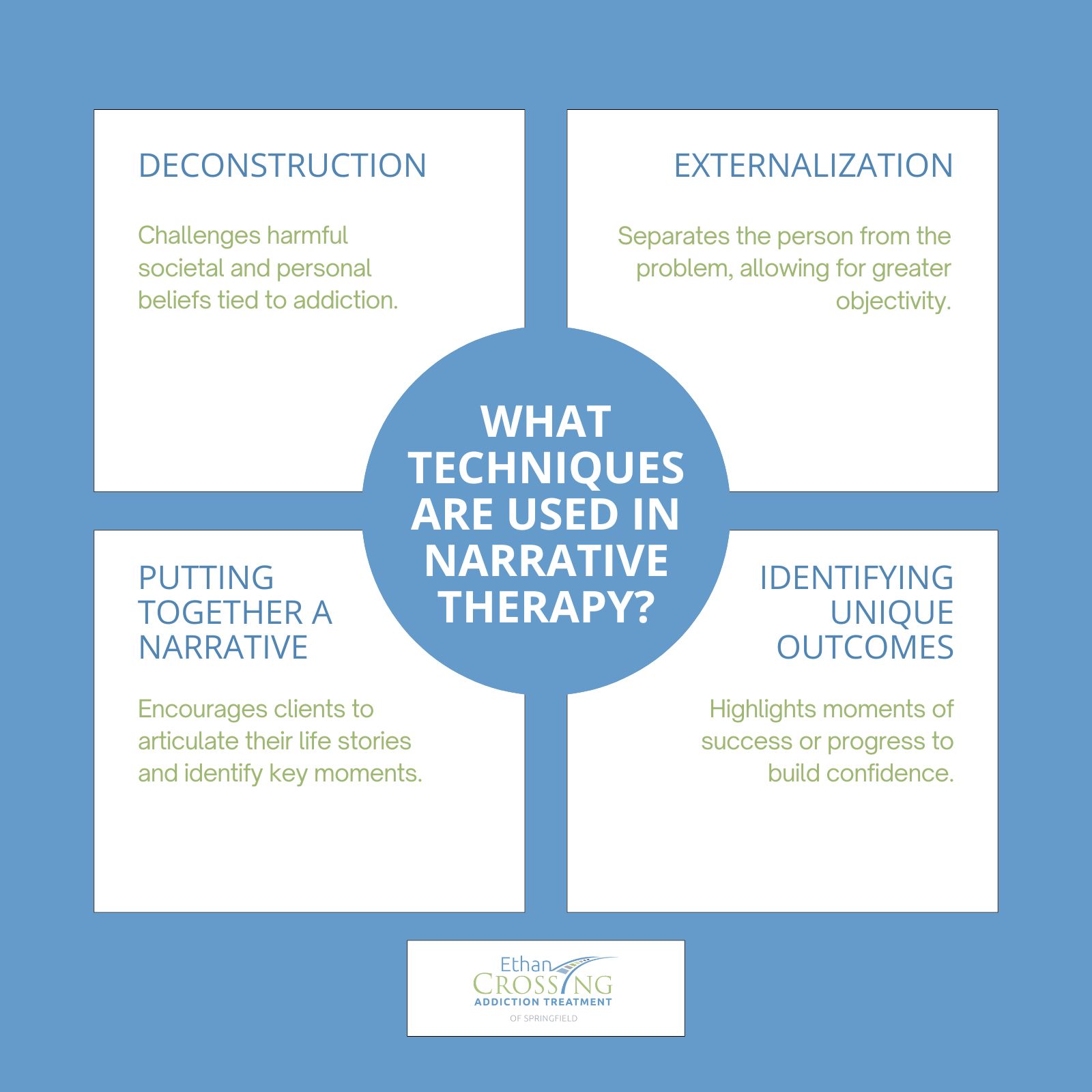
The techniques used in narrative therapy are putting together a narrative, externalization, deconstruction, and identifying unique outcomes. Each method is important in addiction treatment and recovery because it enables individuals to reshape their identities and perspectives regarding substance use.
1. Putting Together a Narrative
The putting together a narrative technique involves patients in addiction treatment articulating their life stories, helping them understand the context of their addiction. By constructing a narrative, individuals identify key events and choices that led to their substance use, fostering meaningful self-reflection.
This is evident in the case of Mr. D., a 54-year-old man diagnosed with pancreatic cancer, as published in the European Journal of Oncology Nursing in 2010. After aggressive treatments and limited relief from psychostimulants and antidepressants, he reflected on his dream of becoming a photographer and decided to create a photo album for his children. Involving family members and capturing everyday moments, this project became a meaningful outlet for connection. Tragically, he passed away just ten days after completing the album, which served as a cherished legacy.
Mr. D.’s journey illustrates the power of narrative construction, similar to how individuals in addiction recovery articulate their stories. This process helps them identify pivotal moments, fostering insight and understanding of their addiction.
2. Externalization
Externalization encourages patients to view their addiction as separate from their identity, allowing them to articulate their experiences without internalizing shame and guilt. In the study published in Addiction and Health in 2018 involving 44 women with addicted husbands, the externalization technique was effectively applied in groups of 20 participants, facilitating collective support and interaction. Throughout 10 counseling sessions, participants practiced externalization, which empowered them to take control of their recovery. The use of the MHI-28 to measure psychological well-being and distress provided a framework for assessing the impact of this approach. The results, with a significance level of P < 0.001, demonstrated that externalization significantly enhanced psychological well-being and reduced distress, underscoring its value in addiction treatment and recovery.
3. Deconstruction
Deconstruction in narrative therapy involves analyzing and challenging negative beliefs and societal narratives related to addiction. This technique helps patients unpack the meanings they attach to their substance use, allowing them to replace harmful beliefs with empowering ones.
Patients are encouraged to critically examine internalized stories about themselves and their addiction, identifying stereotypes and stigmas that contribute to feelings of shame. Questioning the validity of these negative beliefs, such as feeling “hopeless” due to addiction, enables patients to explore evidence of their resilience and capacity for change.
This process fosters a more nuanced understanding of their experiences, enabling individuals to reframe their identities. Replacing detrimental narratives with empowering ones enhances patients’ self-worth and agency in recovery, ultimately promoting healing and personal growth.
4. Identifying Unique Outcomes
Identifying unique outcomes in narrative therapy focuses on moments when individuals successfully managed their addiction or made positive choices. This technique helps patients recognize their strengths and reinforces a sense of agency.
Therapists guide patients to reflect on specific instances when they resisted urges to use substances or made healthier decisions. For example, a patient might recall choosing to seek support from friends instead of using substances during a stressful period.
Exploring these unique outcomes allows patients to construct a more balanced narrative that includes their successes alongside their struggles. This process boosts self-esteem and encourages the development of coping strategies for future challenges.
What are the Benefits Of Narrative Therapy?
The benefits of narrative therapy include reduction of shame, empowerment, supportive community, increased resilience, improved coping strategies, etc.
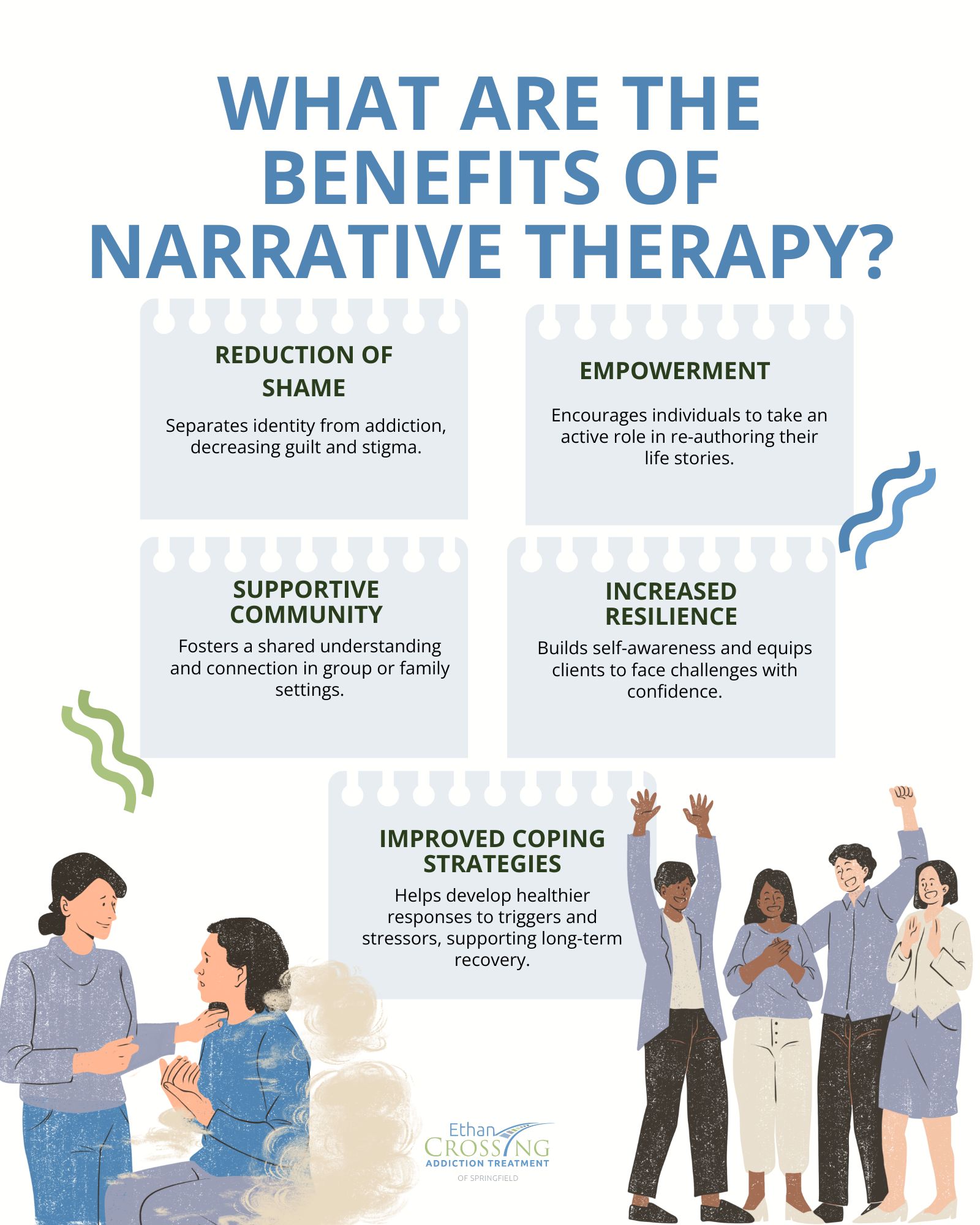
The main benefits of narrative therapy in addiction treatment include:
- Reduction of shame: This therapy helps individuals separate their identity from their addiction, reducing feelings of guilt and shame that often inhibit the willingness to seek help and maintain recovery.
- Empowerment: Patients are encouraged to externalize their addiction, viewing it as a challenge rather than a defining characteristic. This shift in perspective motivates individuals to take an active role in their recovery process.
- Supportive community: Narrative therapy fosters a sense of community among participants, allowing them to share experiences and learn from one another. This support network is crucial in reducing feelings of isolation during recovery.
- Increased resilience: Exploring personal life stories enhances self-awareness and understanding of the underlying factors contributing to addiction, which is essential for effective treatment and long-term recovery.
- Improved coping strategies: The therapy helps patients develop healthier mechanisms for managing triggers and stressors related to their addiction, which is vital for preventing relapse and maintaining sobriety.
How Effective Is Narrative Therapy?
Narrative therapy is very effective in the treatment of addiction, particularly in tackling psychological symptoms such as depression and anxiety that often accompany substance use disorders. Narrative therapy has proven effective, particularly in treating post-traumatic stress disorder (PTSD), as shown by a meta-analysis published in the European Journal of Psychotraumatology in 2019 titled “The effectiveness of narrative exposure therapy” indicating significant improvements with large effect sizes of g = 1.18 post-treatment and g = 1.37 at follow-up.
What are the Limitations Of Narrative Therapy?
The limitations of narrative therapy in addiction treatment and recovery include its reliance on verbal communication, the need for skilled therapists, potential cultural biases, and varying individual responsiveness. People who struggle with verbal expression find it difficult to engage in the storytelling process. The effectiveness of the therapy also depends on the therapist’s expertise; inexperienced therapists hinder progress. Cultural biases limit the approach’s effectiveness across diverse backgrounds. Additionally, some clients do not resonate with narrative therapy and might benefit more from structured or directive forms of treatment.
Is Narrative Therapy Evidence-based?
Yes, narrative therapy is considered evidence-based for addiction treatment. A study titled “Comparing the Effectiveness of Psychotherapy based on Narrative Therapy and Cognitive Behavioral Therapy on the Possibility of Relapse in Opioid-Dependent Patients after Detoxification” involving 45 opioid-dependent patients, who received eight 90-minute sessions of either narrative therapy or cognitive behavioral therapy (CBT), found that both approaches significantly decreased the risk of relapse.
However, narrative therapy was shown to be more effective, particularly noted in the post-test and follow-up assessments. The structured approach of narrative therapy allows clients to articulate their experiences and integrate their life stories, fostering empowerment and resilience.
What Mental Health Issues Are Treated With Narrative Therapy?
Narrative therapy is effective in treating a variety of mental health issues, like post-traumatic stress disorder (PTSD), depression, anxiety, substance use disorders, and eating disorders. It is particularly useful for individuals dealing with trauma, as it helps them reframe their experiences and externalize their problems.
Also, narrative therapy supports individuals facing relationship challenges, self-esteem issues, and identity crises, making it a versatile approach to addressing complex psychological concerns.
Does Narrative Therapy Work For Depression?
Yes, narrative therapy is effective for treating depression, as evidenced by recent research indicating significant improvements in depressive symptoms. A meta-analysis published in the International Journal of Clinical and Health Psychology in 2024 titled “Effectiveness of narrative therapy for depressive symptoms in adults with somatic disorders” found that narrative therapy led to a standardized mean difference (SMD) of -1.64 in depressive symptoms among adults with somatic disorders, based on a sample of 4,879 participants (p < 0.001). This underscores the therapy’s potential to help individuals reframe their experiences and beliefs through storytelling, which fosters resilience and promotes emotional well-being.
Additionally, narrative therapy encourages self-reflection and personal empowerment, enabling individuals to identify and tackle the root issues contributing to their depression. While further research is needed to strengthen the evidence base, the existing findings support narrative therapy as a valuable intervention for managing depressive symptoms.
Is Narrative Therapy Good For Trauma?
Yes, narrative therapy is effective for trauma, as it provides a structured way for individuals to articulate and process their traumatic experiences. It also allows patients to recount their life stories chronologically, which helps them integrate fragmented memories and emotions into a coherent narrative.
A case study published by the American Psychological Association in 2017 titled “Narrative Exposure Therapy” involving Eric, a 24-year-old refugee from the Rwandan civil war demonstrated the effectiveness of narrative exposure therapy in alleviating PTSD symptoms. After six 90-minute sessions, Eric reported huge relief from his intrusive memories and nightmares, ultimately no longer meeting the criteria for PTSD at a six-month follow-up. The process not only facilitated emotional processing but also empowered Eric by reframing his identity from victim to survivor.